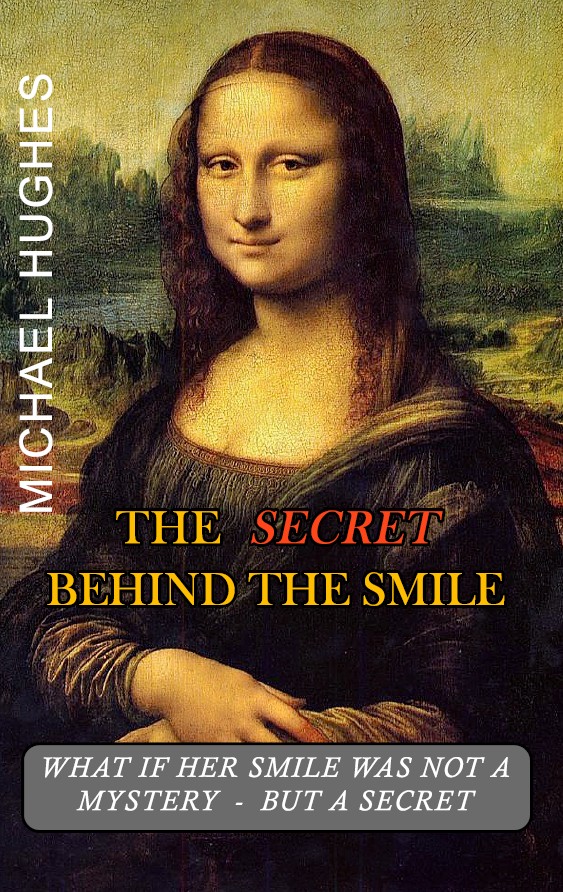
GIACONDA!
THE SECRET BEHIND THE SMILE     
 

THE MUSICAL       


The Story


READ/DOWNLOAD AS A PDF
BEST FOR PHONE!

DOWNLOAD AS A WORD DOCUMENT

‘The Secret Behind The Smile’

is a novella based on the script of GIACONDA!  -  a traditional 'book' musical written first and foremost for musical theatre.


GIACONDA! – meaning ‘the happy one’ - tells the real story behind the creation of Leonardo Da Vinci’s masterpiece, the Mona Lisa. A previously untold secret that is hiding behind that seemingly innocent smile.

Set in Renaissance Florence at the start of the 16th century it's a fascinating though ultimately tragic story of intrigue, clandestine affairs, illicit love, murder, blackmail and betrayal, that reveals the secret of a passionate affair between Lisa del Giocondo and Leonardo da Vinci's favoured apprentice Salai, set against the background of Leonardo's lifelong illicit love for Salai.

Woven around known facts,  dates, characters and locations are as accurate as history will allow. It is, though, an original dramatic interpretation and where necessary some characters and certain events are assumed.


Introduction


Leonardo Da Vinci and the Mona Lisa …

     ...probably the most famous combination in the history of art.

Five hundred years after his death Leonardo is still celebrated as one of the greatest geniuses that ever lived.

He has always fascinated me. Genius is an overused word, but the more I learned about him the more I recognised that this man, above all, is surely deserving of that title. Mathematician, inventor, anatomist, civil engineer and of course artist and sculptor; in all these things he was hundreds of years ahead of his time.

His artistic genius is perhaps never better expressed than in the Mona Lisa - La Gioconda, but as I looked deeper into his life and events surrounding the creation of this, the world's most recognisable masterpiece, I discovered many unanswered questions and realised there was an astonishing story to be told.

There is still a degree of mystery surrounding the painting. Five hundred years is a long time and history is an imprecise science. We rely on accounts often written many years after the event - Giorgio Vasari's definitive biography of Leonardo was written more than thirty years after he died, then corrected eighteen years later - and scholars still debate many basic details generally assumed to be fact.

As anyone who has been to the Louvre will tell you the painting itself is surprisingly small – 77cm x 53cm,  (30" x 21") – on a thin sheet of poplar wood. One thing we can be sure of is that it was never delivered to the man who commissioned it, Lisa's husband, Francesco del Giocondo.

So why did Leonardo not finish it at the time?

He kept the painting with him until his death and research has now revealed many alterations to the original, the most notable being the overpainting of a typical headdress of the period, the form of which can still be detected around La Gioconda’s hair.

There are also minor changes to the hands and other detail, probably done in Leonardo’s later years, which keep the scholars wondering if it is all truly the work of the Master.

And what of the Monna Vanna, a nude study of Lisa now proved to have been drawn in Leonardo's studio at the same time as the Mona Lisa? A drawing that plays a significant role in our story.

There is no doubt that these portraits held a special significance for both Salai and Leonardo, so why was this?

'The Secret Behind The Smile' seeks to answer some of these questions and explain the remarkable events surrounding the creation of this iconic masterpiece.

Phil Hampson                

The Prologue is inspired by Amilcare Ponchelli’s 1876 Opera, ‘La Gioconda’, which strangely enough has no connection at all with the Mona Lisa. This itself was loosely based on the 1835 play ‘Angelo, Tyran de Padoue’ by Victor Hugo.

Prologue I            Where it all begins

Florence                                             August, 1473


Our story takes place in Florence in the autumn of 1503, when Leonardo first began working on the Mona Lisa. However the extraordinary happenings of those few months are set in motion by a seemingly unrelated incident some thirty years before, involving two people who will come to play a decisive role in the events that follow - Bastiano and Aragona.

It is the day of the annual Regatta del Palio on the River Arno…


The afternoon sun hung over Florence like a burnished coin, turning the sandstone façades of the Piazza della Signoria to gold. Every window was dressed for celebration. Banners bearing the red lily of the Republic fluttered from carved balconies; garlands of ivy and silk ribbons looped from arch to arch. From every direction came the noise of a city rejoicing: the laughter of children darting between stalls, the gossip of matrons, the calls of merchants selling sweetmeats and wine.

Regatta del Palio   a festival of the river, the proudest spectacle of summer, when Florence proved again that the Arno itself flowed to her glory. The races would be held downstream, near the Ponte alla Carraia, yet the heart of the celebration beat here, before the Palazzo della Signoria, where the people gathered like bees to the honey.

Among the crowd stood Bastiano, a man who appeared to belong and yet never did. He was neither richly dressed nor poor, but his garments were too carefully chosen for simplicity   the dark, well-cut doublet that marked a servant of some invisible authority, the small Medici badge concealed beneath his cloak.

Florence, one of the five main Italian city states, is at this time a city ruled by fear and political intrigue. Although a Republic, governed by the Signoria – the ‘City Council’ - it is in effect controlled by the powerful Medici family. It can be a dangerous place - state spies are everywhere, watching and listening.

Bastiano, who styles himself as the ‘Grand Inquisitor’, is one of them, not nice to know and not a man to get on the wrong side of.

He was, by the city’s whisper, a functionary   though few could have said precisely of what. Some said he worked for the Signoria, others swore he was in the pay of Lorenzo de’ Medici himself. Bastiano never corrected them. He preferred to be a man of rumours. In Florence, rumour was power.

He watched the square with the patience of one used to waiting for others to reveal themselves. There was something reptilian in the stillness of his gaze: the way his eyes moved when the rest of him did not. The bells of the Palazzo tower tolled the hour, and a crier’s voice rang out above the noise.

“Signore e Signori!  Make your way to the river! The final race is about to begin   the Medici Trophy! Rudolfo and his men from Pisa against your own champion, Zuane!”

A cheer rippled through the square, warm and eager. The crowd surged toward the narrow streets that led down to the Arno. But Bastiano lingered. He smiled faintly, his lips curling in private amusement. 

“Fools,” he murmured. “All this noise over a race of boats. Let them shout and drink   the happier they are, the easier they are to watch.”

He turned his head, scanning faces   the apprentices with their garlands, the old men dicing in the shade, the painted women laughing too loudly. And then he saw her.

A young woman was crossing the square, guiding an elderly blind woman by the arm. The girl moved with quiet grace   not the self-conscious elegance of the courtly ladies who paraded their gowns, but the unstudied poise of one accustomed to care.

Her name, as Bastiano well knew, was Aragona Farnese; the blind woman was her mother, Giovanna. The Farnese were of noble blood once, before their fortunes had thinned to threadbare gentility. They lived now in a modest house near the Santo Spirito quarter, sustained by what little remained of a dowry, and by Giovanna’s knowledge of herbs and ‘simples’ - medicinal cures. Knowledge that, in a more ignorant age, could easily be mistaken for witchcraft.

Bastiano’s eyes darkened as he watched them. There was a time, not long ago, when he had pursued Aragona with the same persistence he brought to his duties   and she had rejected him, wounding his pride with a disdain that had burned like acid,

He moved forward, the crowd parting around him. Aragona saw him almost at once. Her step faltered. Her hand tightened on her mother’s arm.

“Why do you stop, my daughter?” Giovanna asked, her sightless eyes turning toward the sound of the voices.

“Is something wrong?”

“No, Mama,” Aragona answered softly. “Only… I have seen an old acquaintance. Sit here a moment, on the steps. I won’t be long.”  She helped her mother to the cool stone steps of the Palazzo, then turned to face Bastiano.

“Aragona,” he said, his voice smooth as oil. “What a happy coincidence. I had begun to think you were avoiding me.”

“I was,” she said evenly. “For good reason.”

Bastiano smiled, stepping closer. “Ah… was it something I said or something I did? Or perhaps something I didn’t do?”

She turned to leave, but he caught her wrist.

“Come now. Why do you tease me. You know you want me.”

  Her eyes flashed. “Let me go, Bastiano. I don’t tease you and I certainly don’t want you. I’m not one of your street women.”

“No,” he said softly, “you’re not. But you could be something far better   if you’d only learn what it is to be grateful.” His hand moved as if to draw her nearer.

 Aragona wrenched herself free and, in a single furious motion, struck him across the face. The mark of her nails glowed red against his cheek.

Puttana he hissed — Bitch! “You’ll pay for that, witch’s daughter.” Giovanna’s voice carried faintly from the steps.

“Aragona! What is it?”

Aragona turned back at once. “Nothing, Mother. Just a bit of fun.”

She guided Giovanna away, her shoulders trembling though her head remained high. Bastiano touched the blood at his cheek, smiling with a predator’s patience.

“So, you still have claws. We’ll see how long they last.”

The square had almost emptied, the crowd drawn to the river, and for a while only their distant roar came back on the wind. Bastiano lingered in the shade of the Palazzo’s archway, waiting.

When the first shouts of returning voices echoed through the piazza, they were not joyful. The boatmen of Florence came back up the street with their oars on their shoulders, faces clouded, tempers raw. Zuane, the city’s champion, strode among them like a man betrayed.

“I don’t understand it,” he muttered. “We were leading. We had them beat by half a length.”

“Then what happened?” someone asked.

“We slowed. The boat itself fought us. As if the water turned against us.”

Bastiano stepped from the shadow, all solicitude and curiosity.

“Lost, did you? Zuane, that’s a tale I’ve never heard before.”

Zuane spat into the dust.  “Never seen such a thing. They pulled ahead as though some devil pushed them.”

“A devil?” Bastiano repeated softly. “Or a spell?”

The word spell seemed to hang in the air. The men shifted uneasily. One crossed himself.

“What are you saying?” Zuane demanded.

“Only what any man can see,” said Bastiano. “Look there   at that old woman and her daughter. The one who calls herself a healer. I’ve seen them with Rudolfo’s crew. And,  I believe the daughter is Rudolfo’s lover”

Zuane frowned, uncertain. “Yes… so?”

“There you have it,” Bastiano continued smoothly. “Witchcraft. They cursed your boat so that Rudolfo might win.” Lowering his voice and looking round furtively he lied.  “I heard them plotting.”

The suggestion struck its mark like a spark falling into dry straw. The men looked again at Giovanna and Aragona, who had paused at the far side of the square, unaware of the growing storm.

“The witch and her daughter!” cried one.

“They cursed us!” shouted another.

Zuane’s anger found its outlet. “Of course! That explains it. They’ve cursed the race!” 

The idea spread through the crowd like wildfire. Already restless from defeat and drink, they surged forward. The cry became a chant: “Witch! Witch!”

Aragona heard the first shout and turned. A dozen faces glared at her   faces, some of them she had known since childhood, twisted now by fear and ignorance.

She flung herself before her mother.

“No! Leave her be   she’s blind!”

“To the river with them - then we’ll see!” someone roared. “Drown the witch before she curses the rest of us!”

Hands reached for Giovanna. The old woman stumbled, bewildered, as rough fingers clutched at her shawl. The square was a chaos of voices, curses, and shouts. Aragona clung to her mother, shielding her from the mob’s clutching hands, but the tide was rising against them. Shouts of “Witch!”  “To the river!” split the hot afternoon air. It seemed all reason had fled Florence.

Bastiano watched   smiling.

And then — cutting through the clamour a woman’s voice rang out, strong and commanding.

“Wait! Wait! Listen to me!”


Prologue II            A promise is made


Just when it seemed the mob  would have it’s way, up on the stone steps of the Palazzo a woman had appeared   tall, proud;  her dark hair unbound from beneath her veil.

Lucrezia del Caccia, known throughout the quarter as a woman of integrity and substance, lifted her hand for silence.

The effect was instant. The crowd hesitated, turning toward the sound.

“You all know who I am,” she said, her breath quick but her tone steady. “And you know I speak the truth. This lady is no witch. She is Giovanna Farnese — aye, that Giovanna Farnese! There isn’t a more God-fearing family in all Florence.”

The murmur that followed was divided — half relief, half doubt. One man shouted from below,

“She cursed Zuane’s boat! We all saw what happened!”

The crowd began to stir again, the brief calm dissolving. Someone jostled forward; another hissed a curse. The noise swelled — until, at the height of the uproar, the great bronze doors of the Palazzo burst open. Out stepped Lorenzo de’ Medici, the then ‘de facto’ ruler of Florence, his bearing as composed as marble despite the heat of the mob. Beside him walked his wife, Clarice Orsini, her veil glinting faintly in the light, and behind them came two armed guards, their halberds flashing.

“Stop this,” Lorenzo commanded, his voice cutting through the din like a blade. “Stop this at once — or I’ll have you all arrested for rioting. Guards!”

The guards advanced at his gesture, forcing a path to where Giovanna knelt amid the confusion. The crowd recoiled, murmuring but obeying.

“It’s witchcraft!” someone cried again. “Put her in the river — then we’ll see!”

“Silence!” Lorenzo thundered. “A witch? That’s a grave charge to cry in Florence.”

Before he could say more, Aragona broke from the circle and ran to him. Her hair had come loose; tears streaked her cheeks. She fell to her knees on the flagstones before him.

“Signor,” she cried, her voice raw with desperation, “I beg you — this is my mother, Giovanna Farnese. She cannot see! She is no witch. She is a healer, a woman of faith!”

Clarice, recognising Lucrezia, stepped forward from her husband’s side, her calm presence softening the tension.

“Lucrezia,” she said gently, “you know these women, do you not? Can you speak for them?”

Lucrezia inclined her head, still trembling from the confrontation.

“Yes, my lady. The Farneses are good people. There is no evil in them. No evidence of any curse — only lies.”

Lorenzo’s gaze swept the crowd.

“Then who brings this accusation?” he asked. “Name the man.”

From somewhere in the mass of faces came a hesitant voice:

“Zuane. It was Zuane…”

The champion boatman, startled, stepped forward, shaking his head.

“No! No, it wasn’t me. It was Bastiano! He told us he heard them muttering over the water — that they’d cursed the boat!”

All eyes turned to Bastiano. He had begun to edge backward through the dispersing throng, his hand half-raised as if to shield himself from the sun. When he saw the attention fixed upon him, he froze. Lorenzo has no time for Bastiano and is not in the least surprised by what he is hearing.

“Bastiano,” Lorenzo said, his tone like tempered steel. “I might have known. Guards — arrest him.” The guards were upon him in an instant. Bastiano struggled, twisting like a trapped animal.

“Get your hands off me! I am the Grand Inquisitor!” he shouted wildly. “It’s not true!” He thrust a finger toward Zuane.

“Ask him — he’s the one who lies!”

But Zuane stood firm, his voice steady. “No, my lord. We all heard him accuse the old woman. Every one of us.”

A rumble of assent passed through the crowd. Heads nodded; shame beginning to replace anger. Aragona rose to her feet, her voice ringing clear above them.

“He threatened us, my lord. He swore he would have revenge because I refused him. He’s an evil man.”

The fickle crowd are now baying for Bastiano’s blood. Lorenzo looked from the girl to the prisoner, reading the truth written on their faces.

“He is indeed,” he said quietly. “You have gone too far this time, Bastiano. For your evil ways I shall see to it that you serve five years in the Bargello, and when you are released you’ll be banished from this city. Should you be foolish enough to ever set foot in Florence again, you’ll be arrested on sight. Take him away.”

There is no question of a trial, and no appeal. Indeed, such is the power and influence of the Medici, Bastiano is lucky to escape with his life. The people are appeased by this rough justice and feel that honour has somehow been satisfied. The guards seize him more firmly this time. Bastiano’s face is pale beneath the streak of blood on his cheek. As they drag him toward the Palazzo steps, he turns his head, his eyes burning with hatred.

“You’ll pay for this, Aragona Farnese!” he shouted. “Do you hear me? I will have my revenge!”

The words echoed across the square before the heavy doors closed behind him. The crowd began to scatter, the fever drained from them at last. A few muttered apologies; others slipped away in silence. The square that had moments ago been a boiling sea of anger was now still beneath the late sun.

Aragona knelt beside her mother again, gathering her close. Giovanna’s frail hands trembled, but her face was calm, the faintest smile upon her lips. Lucrezia approached softly.

“Signorina,” Aragona said to her, rising, “you saved my mother’s life. You know our family, yet I do not even know your name. How can we ever repay such kindness?”

“Please,” Lucrezia replied, still breathless, “I only did what any Christian should. My name is Lucrezia del Caccia. I knew your brother, Pier Luigi. He was a fine man.”

Giovanna, hearing the name, whispered something to her daughter. Aragona unclasped a slender chain from her neck and placed it in her mother’s hands. Upon it hung a small pendant of gold and red coral, carved into the shape of a horn - the Cornicello, a traditional talisman of protection. Giovanna extended her hands toward Lucrezia, her voice soft but firm with the authority of age.

“My child,” she said, “this Cornicello has been passed down from mother to daughter in our family for generations. But you shall have it now. It is a small reward for the goodness you have shown us today.”

Lucrezia shook her head, eyes wide.

“I cannot. It belongs to your family.”

“Yes,” said Giovanna gently, “but tradition says that a Cornicello, when given from mother to daughter, protects against the evil eye. When you have a daughter of your own, pass it on to her, and it will keep her from harm.”

Aragona added quietly, “It is the least we can do. I vow, one day, your kindness will be repaid. May God bless you, Lucrezia del Caccia.”

The two women turned and departed, their figures slowly fading into the sunlit square until they were lost among the thinning festival crowd.

Lucrezia remained behind. She looked down at the little pendant resting in her palm. The coral glowed faintly in the light, as if still warm with the touch of living hands.

The bells of Santa Croce began to toll the hour. The square was still again, the stones cooling in the shade. Lucrezia turned at last and walked slowly toward the narrow streets of her quarter, the golden Cornicello catching the last of the dying sun.


Six years later Lucrezia , now Lucrezia Gherardini, does indeed have a daughter – Lisa Gherardini, the Mona Lisa – and that seemingly simple trinket will eventually play a crucial part in her life -- and in art history.


Chapter I            Thirty years later

           Leonardo’s Studio,  Florence.          Autumn 1503


Thirty years have passed since the mob’s cries echoed across the Piazza della Signoria. Florence, forever mercurial, has grown older and prouder, its marble streets steeped in the splendour and fatigue of the Renaissance.

Leonardo da Vinci, born the illegitimate son of a Florentine notary, and raised in the hills just outside Florence is now in his early fifties. He enjoys an enviable reputation throughout Italy, not only as one of the leading artists of his time but also as an inventor and military engineer - his work always in demand.

Having left Florence some twenty years earlier he has spent the intervening years enhancing his fame in Milan and Venice with powerful patrons such as the Sforzas, and latterly the Borgias. Now, disillusioned with his work in Milan for Cesare Borgia - and unpaid - Leonardo has moved his household back to Florence. taking space for a studio and lodgings in part of the ancient friary of the Santissima Annunziata.  

He returned from the wars of Cesare Borgia weary of politics. What remained to him were his notebooks, his instruments, and his obstinate faith that invention itself was a form of prayer. In a quiet wing of the friary, he has filled five rooms on two floors. with contrivances, anatomical sketches, broken wings of flying machines, jars of pigments, and the ceaseless rustle of paper. Here he seeks both refuge and purpose, though haunted by the knowledge that genius is rarely rewarded with coin.

On this late morning, light from the high windows fell in pale squares across the cluttered studio. At the broad table, Leonardo bent over a drawing, the pen trembling slightly in his left hand. Nearby, sprawled like a cat on a couch of worn velvet, lay his favoured ‘apprentice’ Salai — his pupil, his servant, his torment, and the unspoken centre of his affections.

It is clear that Leonardo has deep feelings for Salai. Homosexuality was quite common in Florence at that time, and some years earlier Leonardo himself had, with others, twice been accused of sodomy – a crime punishable by death!

He was never brought to trial, possibly because of his and his father’s influence in Florentine society.

For his part, Salai, protective of his position will tease Leonardo but would never respond. Although in later life Leonardo and Salai did become lovers, at this time Leonardo tries to surpress the true nature of his love for Salai, accepting that it is ‘a love that dare not speak its name’.

Born Gian Giacomo Caprotti, Salai - meaning ‘Little Devil’ - is the name given to him by Leonardo – probably because when he was younger he had been known to steal and cheat.

Leonardo indulges him perhaps more than he should. Thirteen years the boy has been with him, and though no longer a boy — twenty-three now, beautiful and incorrigible — he hasn’t changed in spirit. He loves silk doublets, laughter, and his own reflection more than geometry or perspective.

Leonardo straightened at last, pushing his spectacles back into his hair.

“Really, Salai,” he said, weary affection in his tone. “I do wish you would take life a little more seriously.”

Without opening his eyes, Salai smiled.

“But I do take it seriously, Maestro. Only last night I came home early, didn’t I?”

“Early?” Leonardo repeated. “Early this morning, you mean. Where had you been?”

Salai stretched, arms above his head like a lazy cherub.

“I was working. Studying the effect of candlelight reflected off a wine-glass.”

Leonardo snorted.

“Very amusing. And what conclusion did you reach?”

“That it looks much better when the glass is empty — having previously been full, of course.”

Leonardo sighed, laying down his pen.

“And who was paying to fill it up, eh? I don’t see how you can afford to spend every night drinking.”

“But, Master, I’m young. That’s what we do. There’ll be time enough for solemnity when I’m as old as yo… well.. when I’m older.”

“May I remind you,” Leonardo said, crossing the room, “that you are twenty-three — a man, not a boy. It is time you began to earn something for yourself, and to think about your future.”

Salai propped himself on one elbow, eyes bright with mischief.

“Fear not, dear Leonardo. I have good news. I am now under the patronage of a noble lady.”

Leonardo raised a brow.

“I don’t believe it. I thought you’d forsworn your little lies. Truth, you know, has a way of finding daylight.”

“It’s true! I swear it — on my mother’s life.”

“You hardly knew your mother.”

Leonardo folded his arms. “Well, I’ll believe it when I see it… So who is she? Do I know her? What’s her name?”

“Who? My mother?”

“No, you young fool — your patron.”

“Aragona Orsini.”

Leonardo’s head lifted sharply.

“Orsini? The wife of Ludovico Orsini?”

“The very same. She’s getting on a bit — nearly as old as you — but she loves me. Madly.”

“Ah,” said Leonardo dryly, “yet another of your adventures.”

“It’s not like that. Well — not exactly. I like her. And she’s paying me well.”

“I’m sure she is. And you will pay too, if her husband suspects you’ve been fooling around. He’s a powerful man, Salai.”

“Don’t worry. Her husband thinks I visit her to paint her portrait.”

“And do you?”

Salai grinned. “I’ve made a start.”

“Then you’d better make a finish. One day he’ll want to see what he’s paying for.”

“Oh, I’ll tell him I was unhappy with the work and destroyed it. He’ll understand — artistic temperament. He’s such a fool!”

The bell beside the door rang — a single clear note. Neither man moved.

“Salai!” Leonardo said at last. “Will you get up off your backside and see who it is?”

Grumbling, Salai rose and vanished through the archway. A moment later he returned with Father Pietro, a plump friar wrapped in the scent of incense and damp wool. Leonardo greeted him with genuine warmth, embracing him in the old style.

“My dear Leonardo,” said the priest, smiling. “How are you keeping?”

“Well enough, Father. And you?”

“Ah — mustn’t complain. A touch of rheumatics, that’s all.”

“Probably all that kneeling on stone floors,” Salai murmured helpfully. Leonardo cast him a warning glance.

“Thank you for that diagnosis, Salai. Now be useful and pour the good Father a glass of Tuaca.”

“No, no,” Pietro protested faintly. “Not at this hour.”

“Are you sure?”

“Well… perhaps a small one – just to be sociable you understand.” The good Father’s excuse was fooling no-one.  “The boy is quite right, Leonardo — an occupational hazard, this kneeling. And those benches! I sometimes lose all feeling in my rear end for hours at a time.”

Leonardo and Salai exchanged meaningful glances, eyebrows raised. Leonardo laughed, motioning him to a chair.

“Then do sit, Father. It’s good of you to call.”

“Ah, but this isn’t a social call,” Pietro confessed, lowering his voice as Salai handed him the glass. “There’s the little matter of the… rent. The Priore asked that I remind you.”

Leonardo inclined his head graciously.

“Of course. I was just saying to Salai how I’d overlooked it — wasn’t I, Salai?”

“You were, Master,” Salai replied at once. “You’ve been so occupied with work for the Medici that it slipped your mind.”

“Quite so,” said Pietro indulgently. “But it has been several months. Perhaps you wouldn’t mind…”

“Leave it with me,” Leonardo said. “I’ll attend to it — this week.”

“I’m sorry to press the matter,” the friar murmured. “Orders, you see.”

“Think nothing of it. Salai — more Tuaca for the Father.”

“No, no! Well… perhaps just a little.” Pietro chuckled as the glass was refilled. “It is rather good!”

“From Borgia’s own cellar,” Leonardo said with a smile.

“Borgia’s!” Pietro’s eyes widened. “A sinful delight indeed.” He finished the glass, rose stiffly, and sighed. “This week, then. Thank you for your kindness — and the drink.”

“You are always welcome, Father.”

When the door had closed behind him, Leonardo called,

“Has he gone?”

“Yes,” said Salai, returning. “Are you going to pay them?”

“Let them wait. The friars are hardly living on bread and water — or perhaps they are!” He smiled and laughed softly. “If the worst comes, I’ll offer to do them a painting.”

“Still…” He became pensive. “we really must bring in some coin. Borgia keeps his purse shut tight; we should have taken more of his wine.”

“What will you do, Maestro?”

“I’ll take a commission  - reluctantly. Tomorrow I meet a silk-merchant, an old client of my father’s. He wants a portrait of his wife. If we can agree on a price, that will settle the debts.”

“Of course it will,” said Salai, brightening. “You are a great artist. He’ll pay handsomely — it will be a masterpiece. And it will pay more than these strange drawings of yours.”

Leonardo smiled faintly, turning back to his table.

“That may be so. But you know, Salai, I take no pleasure in painting for money. I would much rather pursue my studies. These ‘strange drawings,’ as you call them, will one day prove far more useful than the portrait of some merchant’s wife.”

He lifted a parchment covered with delicate lines and circles. His eyes glowed.

“Look — here! A machine that can make men fly.”

Salai stared, half-amused, half-alarmed.

“Men… fly? Leonardo, have you taken leave of your senses? Everyone knows such things are impossible!”

Leonardo’s expression softened into wonder. He looked not at Salai but beyond him, into the airy distance only he could see.

“Salai,” he said quietly, “once men have tasted flight, they will walk the earth with their eyes turned skyward, for there they have been, and there they will long to return.”

How could either of them know that hundreds of years later Leonardo’s vision would become reality.

The light shifted across the room, glinting on the unfinished wings of wood and silk that hung above the table. Leonardo stood a moment longer, listening to the imagined sound of air beneath a man’s wings. Then he smiled faintly, and bent once more over his work.


Chapter II            Bastiano returns to Florence

        “Il Punto Nero,”  A riverside inn            Same day


The inn was called Il Punto Nero — the Black Spot — and there was something fitting in the name. It crouched on the riverbank like a thief, half hidden by leaning poplars, its windows veiled with grime and the faint, persistent mist from the Arno. The river rolled sluggish and brown beneath the embankment, carrying with it the refuse of the city. A popular meeting place for sailors and ladies of dubious virtue, where no questions are asked.

That afternoon the common room lay in a sort of lazy half-silence: a few merchants dicing in the corner, an old soldier asleep beside his mug, and a serving girl humming as she wiped the tables. Behind the bar, Marco, the potboy, leaned on his broom as though it were the staff of his office.

From the cellar below came the echoing voice of Iseppo, the landlord. A portly man, time-hardened by virtue of  his many years attending to the needs of the seamier side of Florentine life.

“Hey, Marco!”

“Yes, Iseppo?” Marco called back without moving.

A moment later Iseppo emerged from the stairwell, red-faced, wiping his hands on his apron.

“You lazy animal! Have you done all your jobs?”

“Of course I have, Iseppo. All done.”

“Brought the bread?”

“Yes, Iseppo.”

“Swept the street?”

“Yes, Iseppo.”

“Tidied the tables?”

“Yes, Iseppo.”

“Watered the wi — er — the flowers?”

He darted a glance about the room.

Marco frowned.

“Flowers? But we don’t have any flowers, Iseppo.”

Marco was  a likeable boy - not very bright, but big and strong. Just the sort of man to have around in a place like this.

Iseppo’s eyes narrowed.

“Yes — we — do.”

There was a pause, then Marco nodded vigorously, smiling.

“Oh! Yes, Iseppo, watered the… flowers”

Iseppo grunted, satisfied, and retreated once more to his cellar kingdom. Marco grinned and went back to his leaning.

At a corner table, Bastiano sat alone. In the intervening years since he left Florence he had been successful in business and was now modestly wealthy. But time had not been kind to him. The years in prison had turned his hair iron-grey and his eyes flinty with distrust. Yet beneath the ruin there still clung a certain hard authority — the ghost of the Grand Inquisitor he had once been.

He was now a man who had learned the habits of shadows — his cloak drawn close, his face half lost in the folds of its hood. The candle before him guttered, making his eyes appear hollow and bright by turns. He drank slowly, as though to keep his rage.

The door creaked open letting in a breath of cold river air, and a thin, hawk-faced man in a scholar’s gown. This was Totto Machiavelli, younger brother to the more infamous Niccolò. A man whose ambition had not found the same stage as his brother and whose wit had soured in the waiting.

He paused at the threshold, scanning the room, and whispered something to Marco, pressing a few coins into his palm. The boy, after a cautious glance toward the corner where Bastiano sat, nodded and pointed. Totto turned and approached Bastiano’s table with the exaggerated courtesy of one who knows he is intruding on dangerous company.

“Greetings, good sir.” He said with an easy smile. “Will you take a drink with me?”

Bastiano’s eyes flicked up, cold and suspicious.

“And why would you be buying drink for me?”

“Why, are you not famous?” Totto said pleasantly. “Are you not Bastiano — the Grand Inquisitor himself? My brother said I might find you here. He speaks very highly of you.”

Bastiano’s hand clenched around his cup. His voice dropped to a hiss.

“Keep your voice down! If you know who I am, you know I’m not supposed to be in Florence. Your brother, you say? Who are you?”

“My name is Totto,” came the answer. “Totto Machiavelli. My brother is Niccolò.”

At the mention of the name Bastiano suddenly became more amenable. The Machiavelli family had long served Florence, and Niccolò, well known for his political intrigue and dubious tactics, was a potent figure in the struggle for power at that time. As political adviser to the Chancery with ’eyes and ears’ everywhere he was not a man to be ignored.

“Machiavelli…” Bastiano muttered, considering. “Oh yes, I knew Niccolò Machiavelli. They used to say there isn’t a dog in Florence that dares bark without his permission. Though I can’t imagine why he would care where I am.”

“He respects your reputation,” said Totto, sitting opposite him. “My brother has eyes and ears all over this city. He heard that you were back and he told me to see that you… came to no harm.”

His words belied the truth. Totto had been briefed to keep an eye on Bastiano, and make sure he didn’t bring trouble back with him.

 “After all, we serve the same mistress — truth, in her more convenient form. Come, take a drink.”

Marco appeared silently and set two mugs of dark wine between them. The men drank, watching each other over the rims.

“So,” Totto said at length, “the Grand Inquisitor was thrown in jail and banished. What was your downfall? Money — or a woman?”

Bastiano’s lip curled.

“Money? I had enough. They never found it, and they never will. No, it was a woman. And I swore, as God hears me, that one day I would have my revenge. That sweet dawn draws ever closer.”

Totto leaned forward, intrigued.

“What? She’s still in Florence? Is that why you came back? A big risk, my friend — you could end up in the Bargello again. Who is she?”  Bastiano studied him, weighing the question.

“Why are you so interested?”

“Because,” Totto said smoothly, “I might be of use to you. Men in my family have a talent for… delicate arrangements.”

Bastiano hesitated, then leaned forward

“Her name is — was — Farnese. Aragona Farnese.

Totto raised his brows.

“Aragona! I know her. Trouble for any man - and more so now she’s married into the Orsini family, I hear.”

“Trouble perhaps,” Bastiano murmured, “but my trouble was worse. Those years in the Bargello’s dungeons will be paid for, every one. You know her, you say?”

“I do,” said Totto, swirling his wine. “But take care. A man intent on revenge is a danger to himself as much as to others. Still, I can sympathise with you. I too once fell under such a spell. A certain lady named Lisa Gherardini — thought herself too good for me. Then she went and married a cloth merchant! A merchant!” 

He laughed bitterly. “Imagine    a Machiavelli passed over for a tradesman.” He spat out the word like sour fruit.

Bastiano was thoughtful.

“You know, Totto, perhaps I can use your help.”

His voice was lower now. “I hear Aragona is seen often with that young apprentice of Leonardo da Vinci,” he continued. “He calls himself Salai. She is supposed to be his patron, but we both know what she really gives. I can’t risk being seen, but you — you can be my eyes and ears. Follow her. Bring me proof enough to ruin her name. Her husband will do the rest. You’ll be rewarded handsomely — very handsomely.”

Then he rose, gathering his cloak about him. Totto stood as well, and followed him to the street. The afternoon light beyond the doorway was grey and thin, the sound of the river like a low growl beneath their words. Totto smiled, laying an arm companionably across the other man’s shoulders.

“Helping an old friend of my brother is reward enough. Leonardo, you say? Then they’ll be lodging at the Friary of the Santissima Annunziata. I know that place — its passages, its secrets. Few men alive know it better than Totto Machiavelli.”

Bastiano’s mouth curved in satisfaction. “Then we understand each other.”

“Indeed,” Totto murmured, as the two men disappeared together into the gathering dusk. “Consider it done.”

The door of Il Punto Nero swung shut behind them, and the tavern returned to its shadows — the river sighing beyond, as if it already knew what sin was preparing to take root once more in Florence. Together they vanished into the deepening fog, two conspirators bound by greed, resentment, and the dark thrill of vengeance.


Chapter III            First meeting

          Leonardo’s Studio                          Next day


The late afternoon light fell in long shafts across the cluttered rooms of Leonardo’s studio, with a pale, reverent glow. Leonardo, restless and preoccupied, paced the floor with the measured impatience of one who detested waiting.

“Come on now, Salai,” he called, the echo of his voice bouncing against the high ceiling. “You know how important this is to us.”

From the adjoining room came a muffled yawn, then the shuffling of feet on stone. Salai appeared, his hair uncombed, his shirt open at the throat, looking every inch the indolent youth that Leonardo both adored and despaired of.

Leonardo turned, appraising him with a sigh. “And do try to smarten yourself up a bit. These are society people, you know. Not the usual crowd of vagabonds that you hang around with.”

Salai grinned, brushing back his unruly hair. “Yes, well, at least my friends don’t have any pretentious haffec-ta-tions...

“Yes,” Leonardo replied dryly, “and they don’t have any money either — which is precisely why you’d be well advised to” — he reached out suddenly and ruffled Salai’s hair, forcing a laugh from the young man — “make a little effort!

Salai wriggled free, feigning annoyance. “I’ll wager she’s hideous,” he said. “All covered in boils - or something worse. You’ll have your work cut out to make her look even half-decent.”

“In which case I’ll turn them away    debts or no debts,” Leonardo said, though the firmness in his voice could not quite hide a flicker of uncertainty. “I’m already having second thoughts about this whole business. Still, by all accounts she’s something of a beauty and — ”

The bell rang sharply from the entrance. Leonardo stopped mid-sentence. “Oh, here they are. Go and greet them    quickly now…”

Salai rolled his eyes but obeyed, disappearing down the corridor. Leonardo straightened his doublet and smoothed the creases from his sleeve, muttering under his breath, “And don’t say a word until you’re spoken to!”

Moments later, the door opened again. Salai reappeared, leading in a finely dressed couple: the merchant Francesco del Giocondo and a woman whose face was hidden beneath a delicate veil.

Francesco del Giocondo is a moderately successful silk merchant fifteen years older than Lisa, who is his third wife. Lisa enjoys Francesco’s modest wealth, while Francesco’s stock has improved by marrying a Gherardini – a well respected family name in Florence, where lineage matters above all.

“Signor and Signora del Giocondo, Master,” Salai announced with exaggerated politeness. Then, passing Leonardo, he murmured under his breath, “See, I told you — he has to keep her hidden!”

Leonardo ignored him and stepped forward with gracious dignity.

“Signor del Giocondo, it’s such a pleasure to meet you at last. My father has spoken well of you.” Turning slightly, he gestured to the boy. “You’ve met my assistant. This is Salai.”

Francesco inclined his head in a curt nod. “The pleasure is all mine, Leonardo. Your father is very proud of you. We are indeed fortunate to have such a great artist back here with us in Florence. You must be a very busy man. I hope you’ll be able to find the time to ‘fit us in’.”

At that, Salai coughed theatrically. Leonardo shot him a frown sharp enough to cut marble.

“Indeed, sir. Indeed,” Leonardo replied smoothly. “And this must be…”

“Oh yes.” Francesco gestured to his wife. “Leonardo da Vinci, may I introduce my wife, Lisa Gherardini del Giocondo.”

At his signal, Lisa stepped forward and removed her veil. The air seemed to change at once. She was young, a similar age to Salai; her face illuminated by that rarest kind of beauty — one that did not flaunt itself but lingered quietly in the gaze, deepening the more one looked. Her composure was gentle but not meek; her eyes, dark and calm, held a secret strength. For a brief moment, Leonardo, who had studied every proportion and principle of beauty, forgot them all.

“Signor Leonardo,” she said softly, “it’s an honour.”

Leonardo bowed and took her hand, his voice unsteady with a sudden reverence. “The honour is mine, Signora. My, my… such beauty… such…” He paused, almost embarrassed by the force of his own reaction.

“Please, forgive me for being so bold, Signora. It is just the way of the artist. I’m almost lost for words. Only a fool would turn down the chance to capture such… radiance.” He shook his head, half to himself.

Lisa smiled faintly, though her composure wavered under the intensity of his gaze. Leonardo studied her features, his mind already tracing lines of light and shadow in the air. “Those eyes, Salai — such depths for one so young…”

But Salai, too, was staring at her, caught off guard by her beauty. He stood dumbly, unable to tear his gaze away.

“Salai, are you listening?” Leonardo snapped softly. “Do you think I can do justice to this lady’s beauty? Hmm? Do you think I can capture her — ”

Soul…? Master.” Salai blinked, recovering his voice. “Well — if anyone can, you can. Master.”

Francesco, amused by the exchange, clasped his hands. “So, you’ll take my commission, Leonardo?”

Leonardo hesitated only a moment before replying. “Well, it’ll mean disappointing a few others — and I can’t promise how long it will take — but yes, yes of course I will. Come, let’s take a glass of wine and we’ll agree the details.”

He guided Francesco toward a side table, pouring wine as they spoke in low tones. Salai lingered near Lisa, unable to resist the mischievous impulse to engage her.

She stood silently, pretending to examine a sketch pinned to the wall, but she could feel his eyes upon her. When she turned, he quickly looked away, only to glance back a moment later, leaning first to one side, then the other, as if trying to steal a better view of her face. Each time, she moved to block his gaze, lifting her veil half-playfully, half-defensively.

The standoff ended with an unexpected laugh from her, light and melodic, echoed by his own. It was an awkward, wordless truce.

Leonardo and Francesco returned, both smiling, the negotiations evidently concluded.

“It is all agreed, Lisa,” Francesco declared. “Signor Leonardo will accept our commission, and you will come here to the studio to sit for him.”

“Yes,” Leonardo added warmly, “and if it makes you feel happier, you must bring your maidservant — though I suspect it might get a little tiresome for her in time.”

Lisa nodded. “Yes, of course. Tell me, how long will it take? Days? Weeks? Months?”

Before Leonardo could answer, Salai interjected cheekily, “It could be years… eh, Master!”

Leonardo turned a look of disapproval upon him, though Francesco only chuckled. “Oh, you can’t ask an artist a question like that, my darling,” he said. “You’ll have your portrait when he decides it’s ready — and not a moment sooner.”

Lisa bowed her head slightly. “Of course. I’m sorry, Signor Leonardo. I’m looking forward to it.”

“Don’t worry,” Leonardo assured her. “These things take on a life of their own. True art is never finished, you know — only abandoned for a while.” He smiled faintly. “We’ll try not to make the experience too tedious for you. I’ll get some musicians to come and play while we work.”

Lisa raised an eyebrow. “We?

“Yes…” He turned toward Salai. “Naturally, Salai will be helping me.”

Lisa’s expression cooled; she glanced at Salai, who raised his eyebrows in mock triumph, giving her a silent so there look.

Francesco seemed oblivious to the tension. “I’m sure it will all work out splendidly,” he said. “Let us know when you are ready to start, Signor, and I will sort things out.”

“Of course,” Leonardo replied. “I just need to re-arrange a few things. Shouldn’t be more than two or three weeks.”

“Marvellous,” Francesco said. “Come, Lisa — let’s leave these good people in peace.”

Leonardo inclined his head. “May God go with you.”

Salai escorted them to the door, closing it gently behind them. When he turned, Leonardo was already rubbing his hands together in satisfaction, his earlier doubts forgotten.

“Well, Salai,” he said, his voice animated, “what do you think? Is she not exquisite? She has an honest simplicity — and a spiritual quality, so unlike the usual society ladies.”

Salai leaned against the table, his tone softer than usual. “I think she is… simply beautiful. Leonardo, I’d like to paint her as well.”

Leonardo looked up sharply. “Of course. You’ll work on the piece as you always do.”

“Yes, but Master — am I not your apprentice?”

“You are,” Leonardo said cautiously.

“Then surely I can also paint her — at the same time. You can advise me as we go along. Please, Master.”

Leonardo hesitated. The request was bold, almost impertinent, but there was something earnest in the boy’s tone. It was a decision that would have far reaching consequences. Consequences that neither of them could have imagined, but Leonardo found it so hard to refuse Salai

“Well,” he said at last, “I don’t see why not — providing Lisa has no objections.”

Salai grinned, his earlier laziness forgotten. “This calls for a celebration! Come, I’ll treat you to a drink!”

“With my money, no doubt,” Leonardo replied dryly. “No, I have much work to do — or there will be no more treats for either of us.”

“Oh, come on — ”

“No,” Leonardo said, though his voice softened. “I’ll stay here. Thanks all the same.”

Salai shrugged and turned toward the door. “You know, Leonardo, you really should get out more. Make some new friends — maybe find a little romance… It’s never too late, you know!”

He laughed and vanished down the corridor. Leonardo stood still for a moment, listening to the echo of his apprentice’s steps fading into the distance. Wishing there was some way to explain to Salai the passion he felt for him, truly a love that dare not speak it’s name.

The studio fell silent again, except for the whisper of parchment stirring in the slight breeze coming through the half open window, and the distant weary toll of a church bell marking the hour. Leonardo returned to his table, his quill already poised above a fresh sheet of paper. But for once, he did not draw.

“My dear Salai,” he murmured to himself with a wistful smile, “perhaps it is too late — for some of us.”


Chapter IV            Lovers discovered

       The Street Outside the Studio           Dusk same day

The day had folded itself into evening, and the streets of Florence glowed faintly under a wash of amber light that wavered upon the uneven cobbles. The street outside the Friary was nearly empty — save for a single hooded figure lingering in the shadow of an archway.

Totto Machiavelli stood there motionless, his cloak drawn close around him, the dim flare of a nearby lantern glinting upon the corner of a sharp, watchful eye. True to his promise to Bastiano he had been there for some time, his patience honed by habit and purpose.

Somewhere within, the muffled sound of a door latch turned. The heavy door of Leonardo’s lodgings swung open with a groan of the hinges, spilling a brief shaft of golden light onto the cobbles before closing again.

Salai emerged into the street, excited by the meeting with Lisa. His gait was quick and restless, a jaunty silhouette against the fading dusk. He had scarcely taken half a dozen steps though, before a woman’s voice, rich and low, broke the stillness.

Salai!

He turned sharply, startled.

Salai… where are you going in such a rush?”

It was Aragona — veiled, but unmistakable in her poise and perfume. Aragona -- Bastiano’s downfall, Salai’s ‘patron’. Now married into the influential and exceedingly wealthy Orsini family.

She stepped from the shadow, her hand extended, her tone half reproach, half charm.

“Aragona…” Salai breathed, recovering his smile. “How wonderful to see you. Oh, I have important business for Leonardo. Very important!”

She tilted her head, the veil shifting as she looked at him. “Yes, my sweet boy, I’m sure it is. But where have you been? It’s three days since you last came to see me. Three — whole — days.

She drew closer with each word, her voice softening. “You know how lonely I get when my husband is away… If I didn’t know better, I’d think you were avoiding me.”

Avoiding you?

Salai glanced quickly up and down the deserted street to be certain they were alone. Then, with a conspiratorial smile, he reached for her, drawing her into his arms.

“Why, you know I can hardly breathe when we’re apart,” he murmured. “No, no — it’s just that my master has been making such demands on me lately.” He sighed dramatically. “Ah… it is so difficult to get away.”

Aragona looked up at him through her lashes. “Oh, my poor Salai… but I need you too. I can make demands…”

He grinned, a glint of mischief in his eyes. “As I know only too well.”

She turned from him teasingly, the faintest sparkle of mock offence in her movement. “Perhaps you care more for Leonardo than for me. Perhaps I should find another… protégé.” She gave a delicate shrug. “I hear Michelangelo Buonarroti has a new young apprentice who’s in need of some… guidance.”

Salai’s expression faltered. “Oh, how could you even think of such a thing? Have I not declared my undying love? Do I not please you?” He caught her hand, his tone turning to theatrical despair. “You are so cruel to a poor boy.”

“Yes,” she said softly, “but, Salai, is it not more cruel to neglect a poor, lonely, passionate woman whose only desire is to be… wanted?” Her voice dropped to a whisper. “I can get such treatment from my husband.”

Salai’s bravado melted. “Of course, of course. I am so sorry.” He lifted her hand to his lips. “Look — I’ll think of a story for Leonardo, and make sure I’m free tomorrow. That’s a solemn promise. We’ll meet at the inn — at three — and…”

“…I’ll give my maid the day off,” she finished for him, smiling.

Salai laughed softly, his hands sliding to her waist. “And no more talk of Michelangelo’s boy!”

“I won’t sleep,” she whispered.

“Nor will I.”

They kissed beneath the fading light, a lingering, hungry embrace. Then, with a final look, Aragona turned and glided away down the narrow street, her figure dissolving into shadow.

Salai lingered a moment, adjusting his doublet and shaking his head with a rueful smile before striding off in the opposite direction, his footsteps fading into the dusk.

The street fell silent again.

From the darkness beneath the archway, the hooded figure stirred. Totto stepped forward, pushing back his hood, his lips curving into a thin, knowing smile.

“So,” he murmured to himself, “the lovers meet tomorrow at three…” He paused, glancing toward the direction in which Salai had gone. “I think my new friend Bastiano will be interested to hear of this.”

He gave a soft, satisfied laugh as he began to walk away, the echo of his boots hollow against the stones.

“Very interested,” he added quietly, his voice fading into the gathering night.

The lamps flickered once in the cooling air, then the street was swallowed by darkness.


Chapter V            Intrigue at the Inn

            The Inn                            Following day


Il Punto Nero was alive with the afternoon bustle of laughter and clinking cups. Smoke drifted lazily toward the beams, twisting in the warmth of the crowded room where sailors, girls, and merchants jostled shoulder to shoulder. The air was thick with the smell of wine and roasted meat, the hum of conversation rising and falling like the tide itself.

In a corner half lost to shadow, Totto Machiavelli and Bastiano sat apart, the one sharp-eyed and watchful, the other brooding beneath the brim of a felt hat pulled low across his face. The murmur of a song rose from the far side of the tavern   a rough, rhythmic marinaresca chanted by Captain Donati and his crew, a mingling of melody and sea-born cadence that set the rafters trembling with laughter and voice.

Totto leaned closer to his companion, lowering his tone.
“It’s nearly three, Bastiano. Keep your face hidden. We don’t want them to know they’re being watched.”

Bastiano’s mouth curled into a thin smile.

“Do you think I’m a fool? Remember   I was the best in the business at this.”

“How could I ever forget?” Totto murmured. His eyes never left the door. “Quiet now. He’s here.”

The noise of the inn parted briefly as a familiar figure stepped inside. Salai entered with an easy swagger that drew a few curious glances from the tavern girls. He was all charm and grace, the golden curls falling carelessly across his brow.

“Iseppo!” he called, and the innkeeper, round and bustling, looked up from behind the counter.

“Salai! Amico mio! Where’ve you been hiding lately?”

“Not hiding, Iseppo. Leonardo keeps me working. Working hard.”

Iseppo laughed so loudly the nearby tables turned. “You, working… hard?” He slapped his apron. “Come on now, what have you really been up to? Involves some woman, no doubt.”

“Shhh,” Salai hissed, glancing about. “I’m trying not to attract attention. I’m meeting someone.”

Iseppo’s eyes gleamed with sudden interest. “A Signora?

“Yes. A lady.”

“A lady…” Iseppo’s voice dropped. “Who?”

“Never mind who,” Salai said quickly. “You’ll see soon enough. Now bring me a jug and two glasses. I’ll be over there in the alcove. And remember   silenzio!

Iseppo chuckled, shaking his head. “Ahh, don’t worry. Nobody here cares much. They’re all at it anyway. Do you want the good stuff?”

“Not at your prices.”

The innkeeper grinned at that and shuffled off toward the cellar. Salai, unaware of the eyes upon him, took a seat in the alcove   directly within earshot of Totto and Bastiano’s darkened table.

Moments later, the inn door opened again. Aragona stepped across the threshold, her head hooded, her movements quiet yet unmistakably elegant. She scanned the room until she saw him, and a faint smile touched her lips. Without hesitation she crossed to his table.

Iseppo returned just as she took her seat. He balanced a tray with an ostentatious flourish and set the jug and glasses before them.

He leaned in, attempting to peer beneath the hood that half-concealed her face. “Hmmm… Buonasera, Signora.

Thank you, Iseppo,” Salai said pointedly, meeting his gaze.

“Best wine in the house, Signor,” the innkeeper replied with a grin. “Enjoy.” He winked and wandered off with a knowing smile, humming to himself as the sailors’ song rose once more behind him.

Aragona looked around, her voice dropping. “O-oh. There’s Captain Donati!”

Salai turned quickly. “Bernardo? Does he know you?”

“Yes, he does   but he’s an old friend of my family,” she said lightly. “He wouldn’t cause trouble for me. Anyway, why shouldn’t I meet with my protégé? My husband will want to know what I’m getting for his money one day.”

Salai smirked. “Let’s hope he doesn’t find out what you’re really getting. Can we not go straight back to your house?”

“Salai!” she scolded, but her laughter followed close behind, bright and low, easily lost beneath the sailor’s chant.

At the shadowed table, Bastiano’s eyes flashed.

“Ah! They have no shame,” he muttered. “So it’s true   the virtuous Aragona is not as pure as she seems. I’ve seen all I need to see, and heard what I need to hear.”

He made to rise, but Totto’s hand caught his sleeve.

“Not so fast, Bastiano,” Totto whispered. “If you truly want your revenge, you’ll need proof   or there’ll be big trouble. Her husband is a rich and powerful man. He won’t take kindly to you accusing his wife of adultery, whether it’s true or not. She’ll deny it, of course, and if you can’t prove it, you’ll be lucky to get away with your life. Tread easy, my man. Bide your time, I’ll get you your proof.”

Bastiano sank slowly back into his seat. His voice was quieter now, almost thoughtful.

“Ye-es. I suppose you’re right. At least I know now my suspicions are true. I’ll bide my time. A chance will come.”

They rose at last, their figures passing unseen through the crowded room, the laughter and song swallowing them whole. Only the echo of their footsteps followed, soft beneath the clatter of tankards and the shouts of drunken sailors.

The innkeeper, busy wiping a spill, did not even look up.


Chapter  VI            First sitting

           Leonardo’s Studio.              Three Weeks Later

Only three weeks pass until Lisa is invited to Leonardo’s Studio for the first sitting. This is unusual for Leonardo, who is well known for putting things off as long as he dare, and is a telling sign of his enthusiasm to start the project. He has been developing a new technique - ‘sfumato’ - for capturing natural flesh tones and can’t wait to try it with Lisa’s young and perfect skin.

Meanwhile Bastiano has wisely decided to lie low, trusting that his faith in Totto’s promise to bring him irrefutable evidence of Aragona affair would not be misplaced.

It was late afternoon. The light in the studio soft and uncertain, filtering through the high windows in gentle columns of gold. Lisa Gherardini del Giocondo sat on a carved chair near the centre of the room, her back straight but restless, the heavy folds of her gown arranged with careful propriety. The air was close and still, thickened by the scent of paint and turpentine. Two musicians sat in a corner, playing a quiet, meandering melody on lute and viol.

Leonardo, deep in concentration, studied her across the easel, his brush poised, his expression solemn. At his side, Salai worked at a canvas, his brow furrowed   though his eyes, if truth be told, strayed too often toward the lady herself.

“No, no, Signora,” Leonardo said gently. “I know it is difficult, but it helps so much if you can stay in one position.”

Salai muttered under his breath, “At least for two minutes…”

Lisa exhaled, her composure fraying. “But it isn’t easy… and it’s so stuffy in here.”

She was obviously nervous, this was such a new experience, made even more daunting by the fame of the man on the other side of the easel.

“Salai, open a window,” Leonardo said without looking up.

“But Master, it’s hotter outside.”

“I know,” Leonardo replied, his tone patient but firm. “But at least we can have a change of air. Go on! Pronto.

Lisa sighed and adjusted the silk at her wrist. “I didn’t realise it would be quite so… tiring.”

Salai crossed the room, muttering to himself. “Haven’t you done this sort of thing before?”

Irritated, Lisa snapped, “No! You know very well I haven’t.”

On his way back, Salai caught his foot in the edge of the carpet and stumbled. Lisa, despite herself, giggled   a quick, silvery sound that seemed to startle even her.

“Signor Leonardo,” she said, still smiling, “it might be better if there weren’t so many people in here.”

“Perhaps so, Signora,” Leonardo mused. “I find that music helps me to concentrate when I’m working. I thought you might find it relaxing, but…”

He gestured to the corner. The musicians, reading his meaning, bowed politely and slipped away.

Lisa’s eyes, however, were fixed elsewhere. “Actually,” she said, glaring across at Salai, “it wasn’t the musicians I was referring to.”

Salai spread his hands, feigning innocence. “Well, I can’t think what I’ve done to upset you.”

“When I agreed to let you paint my portrait too,” Lisa said coldly, “I didn’t realise you’d be staring at me all the time.”

Salai laughed incredulously. “My dear lady, I’m an artist. How am I supposed to capture your ‘incredible beauty’ if I don’t look at you?”

Lisa tilted her head mockingly. “An artist? I thought you were still learning how to be ‘an artist.’ It’s the way you look at me.”

Leonardo sighed, lowering his brush. “That’s enough, you two. Do please stop bickering. You’re like a couple of spoilt children.”

A moment’s uneasy quiet followed. Then Lisa shifted slightly, the chair creaking under her.

Salai tutted. “Oh, here we go again.”

“It’s not my fault,” Lisa protested. “It’s this chair. Haven’t you got anything more comfortable for me to sit on?”

“We already put two cushions on it for you,” Salai said. “Feather cushions. The finest goose down. I know you high society ladies are supposed to have tender skin, but — ”

“Well it’s still uncomfortable!”

Salai raised an eyebrow. “Ah! I must have left some crumbs on the chair underneath the cushions! Right then, I’ll go out and find an angel or two. They say that angels have the most amazingly soft feathers on their backsides…”

Lisa’s eyes widened. “There’s no need to be rude.”

“No, there isn’t, Salai,” Leonardo said, his tone sharp now. “That’s quite enough from you.”

He was perhaps being more tolerant than they deserved, but it was only the first sitting, and he was determined to keep the mood as light-hearted as possible. In truth he enjoyed being around younger people.

Lisa rose abruptly, smoothing her skirts. “This is ridiculous. Signor Leonardo, is it absolutely necessary for him to be here?”

Leonardo hesitated, torn between amusement and exasperation. “Yes… well… Look, Salai   in future you won’t speak until Signora Gioconda speaks to you. Right?”

“Yes, Master,” Salai said, sullenly.

“…or you’ll have to leave.”

“My lips are sealed, Master.”

Lisa smiled triumphantly at him, and for a fleeting moment, her smile carried something almost dangerous   half triumph, half delight.

Leonardo shook his head and laid his brush aside. “Ahh, this is no good. I need a break. Come, Signora, we’ll take a little refreshment. Salai, you go and look for a better chair.”

Lisa gathered her skirts and followed Leonardo toward the adjoining room. As she passed the apprentice, she glanced back over her shoulder and, with mischievous grace, rubbed her hand coquettishly against her rear as though nursing a bruise   a silent mockery of discomfort.

Salai, watching her go, let out a long sigh. “Ye-es, Master,” he murmured. In reality he was happy just to be there. With theatrical resignation, he trudged off in the opposite direction.

The tension in the studio relaxed into silence   save for the faint echo of departing footsteps and the ghost of a smile that seemed to linger in the empty chair.  It’s an unpromising start!


Chapter VII            The first kiss

           Leonardo’s Studio                    Some weeks later


The light of early afternoon had found its favourite corner in Leonardo’s studio, lending a soft glow to Lisa del Giocondo, who sat posing upon her chair, while Leonardo and Salai painted at their easels.

After several and productive sittings Lisa had grown more at ease with the long hours before the brush. The nervous modesty of her first sitting had given way to a teasing grace, and she moved within the room with a relaxed familiarity, as if she was mistress of the house. The flirtation between her and Salai, half innocent, half perilous, had become as much a part of the sittings as the smell of oil and varnish.

Leonardo, intent upon the delicate play of shadow around her mouth, looked up from his palette. “Come now, Lisa,” he said, in the kindly yet distracted tone of a man half lost in thought. “Where’s that smile? You seem quite sad today.”

“Well, I am a little sad, Leonardo,” she replied. “You know, I’m beginning to believe I shall miss coming here when the painting is finished. It’s turned out to be such fun.” She sighed softly, her eyes lowering. “I don’t really laugh much at home.”

“Oh dear me,” Leonardo murmured. “No one should be sad on a beautiful day like this… should they, Salai?”

“Certainly not, Master,” Salai answered, but his gaze lingered on Lisa a fraction longer than propriety allowed.

Leonardo’s brush swept lightly across his painting. “Things are going well, Lisa, but there’s still much to be done.”

Salai smirked. “No, I wouldn’t worry just yet. My master isn’t known for finishing things.”

Leonardo turned his head with mock indignation. “Salai! How unkind you are. I merely like to take my time, that’s all — and if it’s not a good day, then — ” he shrugged with theatrical resignation.

Lisa’s laughter came like a chime. “Yes, Salai. There’s no need to be unkind. I certainly won’t miss you...”

“Not even a little bit?” Salai teased.

She pulled a face, half child, half temptress.

Leonardo chuckled. “You know, Salai, you could learn to take a little more time yourself — put more thought into your work.”

“I’m sure you’re right,” Salai said. “But I’m young. There’s so much to be done, so much life to be lived. What do you say, Lisa?”

She tilted her head, smiling slyly. “I say you’re both right. A man should have energy and vigour…” Her tone deepened, teasing, “...but then again, he needs experience, does he not? Sometimes youth can be too… hasty. The job may be finished, but not done properly - to the client’s satisfaction.”

Her eyes flashed to Salai’s, daring him to speak. He laughed, but said nothing.

A knock at the door broke the spell.

“Damn,” Leonardo muttered. “Who can that be? Go and see who’s there, Salai.”

Salai obeyed, vanishing through the archway. Leonardo, with a sigh, went to the table to refresh one of the colours on his palette. “I do so hate being interrupted. We were just getting started, and I feel it will be a good day...”

Salai returned presently, his face slightly troubled. “It’s one of the gonfaloniere’s men. He says Soderini wants to see you at once — about ‘the mural.”

Piero Soderini was an important politician, at the head of Florentine governance. Good policy to keep in his good books.

“Ahhh, the mural,” Leonardo said grimly. “Did you tell him I was here?”

“Well, yes… I didn’t realise.”

“Oh, ohhh…” Leonardo sighed. “I’ve foolishly agreed to paint a battle scene for the city — in the Great Hall at the Palazzo della Signoria.”

“I thought you weren’t going to do any more murals,” Salai said. “Too time-consuming, you said.”

“That I did. But they told me that young buffoon Michelangelo Buonarroti is also painting one — on the opposite wall! Pah!”

Salai folded his arms. “Really, Leonardo, I would have thought such childish rivalries were beneath you.”

“I know, I know.” Leonardo’s shoulders lifted in helpless irony. “I suppose I’d better go. They’ll want to know when I’m going to start.”

“Or perhaps finish,” Salai murmured, not quite under his breath.

Leonardo ignored him. “I’ve told you before, true art is never finished, Salai. A thousand apologies, Signora,” he said, turning to Lisa. “You’ll understand I can’t refuse... I could be gone a little while; perhaps we’d better arrange another day.”

Salai spoke up quickly. “Master, would it not be a good idea for me to carry on with my painting for a while? If you should return before too long, then the day is not wasted.”

“Well… yes, fine.” Leonardo said absently. “If the lady agrees.”

Lisa’s voice was soft. “Sadly, I have nothing better to do, Leonardo. Go about your business, and we’ll see what the day brings.”

“I am most grateful, Signora. You’re so kind.” With that, he gathered his sketches and left, muttering to himself about Michelangelo’s “puffed-up arrogance.”

When the door closed, silence drifted over the studio like fine dust. Salai returned to his easel, Lisa sat motionless on her chair. Between them, an awkward, fragile, silence.

“He’s so much in demand,” Salai said at last.

“Yes,” Lisa replied. “Such a busy man.”

A pause, and then they both spoke at once —

“So what — ”

“How did — ”

They stopped, and Salai laughed. “Sorry.”

“No, go ahead,” she said.

“I was going to ask — what do you do with yourself all day? I can’t believe you have nothing better to do than to sit here.”

Lisa’s smile was weary but genuine. “Oh, I could go out and spend some more of my husband’s money, I suppose. Even that gets boring. I have so many fine clothes — but I rarely get the chance to wear them.”

“You don’t go out much, then?” he asked, stepping closer. He reached to adjust the angle of her head, his fingers brushing her skin with deliberate slowness. He took her right hand and placed it on her left arm, but his touch lingered — too long. Lisa’s breath caught. He returned to his easel, his voice calm, his heart anything but. “Yes, that’s better. How about your friends?”

“Francesco doesn’t approve of my friends,” she said. “He says they are too... frivolous.”

“By that, I suppose he means too young. So what does your husband like to do for fun?”

“Fun!” she laughed. “My dear Salai, he’s a cloth merchant — from a family of cloth merchants. He lives and breathes weaves and patterns. His idea of fun is the annual Arte di Calimala Ball.”

“Ah, the Cloth Merchants’ Guild. I’ll bet that’s quite an occasion.”

“I’ll say it is. You’ve never seen such fine costumes.”

“Really?” Salai grinned. “And what do the women wear?”

Their laughter mingled like sunlight on rippling water. He moved toward her again, close enough to see the glint of humour — and something else — in her eyes. “Please,” he murmured. “If you could just tilt your head a little so... If only I could capture that laughter in your eyes — such beautiful eyes. Your husband is a very lucky man.”

“You really shouldn’t say such things.” Her voice faltered. “I don’t think he notices, Salai. He’s older — and he has his business to worry about.”

He took her hand again, tenderly this time, yet with an intensity that seemed to fill the air between them. Unable to stop himself he silently, gently, raised her to her feet. Their eyes locked.

“How could he not notice...” he whispered,

“When I look into your eyes, I can see… forever,”

They stood close — then closer — until their restraint shattered and they embraced. Her breath was quick against his cheek; his hand at the small of her back trembled. She began to pull away, guilt already chasing desire — but turned back once more and kissed him. A long intense kiss that her body had been yearning for. Awakening feelings deep inside that until that moment had been denied her.

Then she broke from him, tears welling in her eyes. “No, Salai. This is wrong. I’m a married woman.” In confusion, she gathered her things, her movements trembling and hurried. “We can’t do this. I must go.”

At the door, she turned and hesitated. “Oh, Salai...” she whispered.

Salai realised he had perhaps gone too far, too soon.

“Will I see you at the festival tomorrow?” he asked. “It’s a feast day — everyone will be there.”

“I... I don’t know...” And then she was gone.

The room fell silent, save for the faint hum of the city outside. Salai sat, staring at the empty chair where she had been. The world seemed suddenly smaller without her.

The latch turned again. Leonardo entered briskly, shuffling through his papers. “I got halfway there and realised I’d forgotten to take my sketches of...” He glanced up, frowning. “Why is Lisa leaving?” His eyes narrowed. “Salai? Have you been upsetting her again?”

“No, Master,” Salai said softly. “No. She wasn’t feeling too well. You know how it is with society ladies.”

“Oh well, not to worry,” Leonardo said. “There’s plenty to be getting on with. I’d better get a move on!”

He swept up his parchments and left again, humming absently to himself.

Salai remained, his brush idle, staring at the portrait before him — the faint smile forming upon the woman’s lips, still unfinished, yet already immortal.


Chapter VIII            Trouble at the Palazzo

          Piazza della Signoria                         Next day


The piazza was alive with festival brightness, the air steeped in sunlight and laughter. Beneath the tall façades of Florence, the great square swayed with colour and sound: ribbons fluttered, tambourines shook, skirts whirled in bright circles upon the cobbles. From the steps of the Palazzo della Signoria came the clear, ringing strains of a folk melody, an traditional dance tune that had passed from generation to generation like an heirloom of joy.

Among the crowd, half amused and half detached, stood Leonardo da Vinci, his sharp eyes softened for once by pleasure, and beside him, Salai, bright with youth, his gaze darting restlessly between the dancers and the people gathered around them. The day was clear, and the banners of Florence rippled gently in the light breeze.

Salai lifted a hand suddenly, catching sight of a familiar figure making her way toward them   Aragona, her face half veiled, her step confident yet cautious, like one unused to mingling freely among the citizens. “Signore,” Salai said, turning to Leonardo with a flourish. “May I present the noble Lady Aragona Orsini?”

Leonardo inclined his head courteously. “Ah, yes   Salai has spoken of you. Welcome, Madonna. You honour the festival with your presence.”

Aragona’s lips curved, though her eyes rested not on the master but on the pupil beside him. “The honour is mine, maestro. One must see for oneself the men who steal so many hours from the daylight.”

Before Leonardo could answer, the crowd stirred again, parting as another couple approached   Lisa and Francesco del Giocondo, hands lightly clasped, the very image of respectable grace. Lisa’s gown shimmered like water, and though she walked at her husband’s side with decorum, her eyes flickered — just once — toward Salai.

“Signor Leonardo!” Francesco greeted warmly. “A fine day for the city, eh? The gonfaloniere spares no expense when Florence celebrates herself.”

“Indeed, Signor del Giocondo,” Leonardo replied, bowing slightly. “And the city never looked more beautiful.”

Lisa smiled faintly. “Nor its people,” she added.

Salai met her gaze with a spark of secret mischief, but before words could follow, a rough voice sounded nearby. Totto Machiavelli, already flushed with wine, had stumbled from the shade of a stall and now lurched toward them, his grin wide and insolent. He stopped near the group, unsteady but still self-assured, and folded his arms as the dance ended in a flurry of applause.

All around, the dancers bowed and curtsied; music and laughter rippled through the crowd.

“I do so love to dance,” Lisa exclaimed, clapping her hands lightly. “Come, Francesco   they’re about to start again. Won’t you dance with your wife?”

Her husband chuckled, shaking his head. “I’m sorry, Lisa. I’m much too old for dancing. In fact, I never was much good at it.” His eyes twinkled with playful indulgence. “I’m sure young Salai here would oblige.”

Salai stepped forward at once, the invitation kindling in his blood. “Yes, of course! I’d be delighted, Signor. Come, Lisa…”

At that, Aragona’s expression changed. A shadow passed behind her eyes   jealousy, quick and hot as flame. Leonardo, watching her uneasily, noted the flicker of tension even as Salai reached for Lisa’s hand. Lisa hesitated, torn between caution and the thrill of being seen.

Over the weeks Leonardo was becoming increasingly aware of the growing affection between Salai and Lisa, and for many reasons --  not least his own feelings for Salai -- it troubled him deeply. Sensing the growing tension he thought it best to try and defuse the situation.

His brow furrowed. “Hold on, Salai,” he interjected, quite out of character, “You know you have two left feet! Let an older man show you how it’s done.”

But before anyone could move, Totto staggered nearer, catching the scent of opportunity like a wolf among sheep.

“Ha!” he cried. “This is a job for a real man. Here, I’ll dance with the lady — ”

He lunged forward and seized Lisa’s arm roughly. The laughter died at once. Lisa gasped, trying to wrench free.

“No! No!” she cried.

In an instant, Salai was upon him, his face dark with fury. It was an over reaction that didn’t pass unnoticed. Perhaps Francesco, in his innocence, thought that Salai was simply being chivalrous, but Aragona sensed, as only a woman can, that there was something deeper. Leonardo stepped swiftly between them, catching Salai by the shoulder.

“That’s enough, Salai!” the master’s voice rang sharp above the noise, commanding, “ … just leave him be.”

Lisa tore herself away and ran to her husband, her breath quick, her cheeks pale with shock. Francesco gathered her close, murmuring something low and angry.

Totto waved a hand, muttering drunkenly, and stumbled back into the crowd. Within moments, the throng seemed to swallow him whole.

Leonardo and Salai stood facing each other, their silence tense. The music faltered, then resumed, more cautious now, as the dancers drew away to give the troubled group space.

Around them, the festival continued   laughter recovering, life resuming   but the shadow of the encounter lingered in the air above that corner of the square. Slowly the crowd started to disperse, leaving the group to awkwardly reflect on what had just happened. Each with their own, unspoken, reasons to have  been emotionally affected.

Normality was gradually restored. Francesco and Lisa chatted with some old friends. Aragona, who hadn’t been feeling her usual confident self, shared a joke with Leonardo and Salai. She was just starting to recover her composure when, from among the retreating figures Bastiano emerged, his cloak drawn close to help conceal his identity.

When he saw Aragona his eyes grew cold with purpose. This was no chance encounter. Following Totto’s advice he had been lying low, biding his time, but his patience was wearing thin. Turning back the hood of his cloak he slowly walked towards her until she could no longer doubt his threatening presence.

When their eyes met, she recoiled as if struck, terror flashing across her face. With a startled cry, and not a word of explanation she turned and fled into the throng.

Bastiano’s lips twisted into a slow, cruel smile. His laughter seemed to follow her through the square   low, bitter, triumphant   echoing against the stones of the Palazzo.

And as the music rose again, brighter now to mask the unease, Florence seemed to dance on, blind to the storm quietly gathering among her lovers, her artists, and her betrayed.


Chapter IX            No turning back

            Leonardo’s Studio       Some Weeks Later,  Monday


The days had blended into one another, and with each sitting, laughter had come more easily. Despite the danger Salai and Lisa, like many before them had followed their hearts, and what had begun as cautious acquaintance had ripened into a deeply affectionate and passionate love affair.

Morning light poured through the high windows of Leonardo’s studio, soft and golden, and across the familiar clutter of the master’s work. It was Monday, the first day of what would prove to be a fateful week.

Lisa sat poised on the high chair, her gown arranged carefully to catch the light, but her eyes were not on Leonardo’s canvas. They flitted, with playful defiance, toward Salai, whose easel stood slightly behind and to the side of his master’s. He was pretending to concentrate, but his brush hung idly between his fingers. Every few seconds, Lisa’s lips curved in a barely suppressed smile; he answered with a wink or a comical grimace.

At last, Leonardo turned from his work, sighing heavily.

“Salai!” he snapped. “Will you please stop fooling around? This is difficult enough without these distractions.”

Salai looked up, wide-eyed with mock innocence. “It’s not my fault, Master. She is deliberately trying to make me laugh — ”

“You too, Lisa,” Leonardo said, pointing his brush accusingly without turning from his canvas.

Lisa raised her hands, laughing behind them. “No, I’m not!”

“Yes, you are,” Salai insisted, grinning.

“That’s enough from both of you!”

Lisa’s shoulders quivered with stifled laughter. “Leonardo, I promise,” she said between giggles. “It’s Salai who’s being silly. Silly Salai.”

At that, both of them dissolved into laughter.

Their barely concealed attraction was starting to try Leonardo’s patience. His love for Salai only adding to his emotional turmoil.

 He threw up his hands, muttering as he wiped them on a rag. “It’s no good. I need a break. A quiet glass of wine, perhaps. Maybe two.”

Still shaking his head, the master left the room, muttering to himself about youth and folly.

The instant the door closed behind him, silence fell   and then broke with a soft rush of breath as Salai crossed the room in two quick strides. He caught Lisa in his arms, and their laughter melted into a kiss, fierce and tender all at once.

“Oh, my darling Salai,” she whispered, breathless. “We must be careful. I’m sure Leonardo suspects.”

Salai smiled, brushing a strand of hair from her cheek. “He certainly would if he saw my other portrait of you.”

Lisa drew back, startled. “What other portrait? Oh, please   show me.”

He chuckled softly. “It’s a surprise. I’ve been working on a slightly different version. One that shows a little more of your… er, beauty. From memory, of course.”

Her eyes widened. “No! Salai, how could you? What if someone sees it? You must show me at once.”

“Don’t worry, my love. It’s hidden well away. You’ll see it when it’s finished. I just need to study the subject a little more…”

Lisa struck his shoulder lightly with her hand. “You are wicked!”

He caught her fingers and kissed them. “Just be patient. Shh… Leonardo returns.”

They parted swiftly, masks of composure falling back into place as the sound of footsteps approached. Leonardo entered, carrying his cup of wine and regarding them both with his shrewd, knowing eyes.

“You know,” he said, setting the cup down, “I think that’s enough for today. I’m feeling quite tired.” Salai blinked. “But Master — !”

“In fact,” Leonardo continued, ignoring him, “I don’t think we’ll need to trouble you to sit for us much longer, Signora. I have all the detail I need.”

Salai stiffened. “No, Master. I have much more work to do.”

Leonardo turned to him, a faint smile touching his lips. “It’s not my fault if you work too slowly. Time stays long enough for those who use it well. Anyway, it’s not like you to take your time doing anything.”

He glanced briefly at Lisa. “I’m sure the Signora will be glad to have her life back…”  adding pointedly “I expect she’d like to spend more time with her family.”

Lisa’s face paled. “I really don’t mind, Leonardo,” she said softly. “If Salai wants me, I’ll gladly come.”

“Well,” said Leonardo, setting down his brush, “we’ll see. That’s it for now anyway. You can get changed, Signora.”

Reluctantly Lisa gathered her skirts and slipped through the curtain to the small adjoining room. The moment she was gone, Leonardo turned on his pupil. His voice, when he spoke, was low and cutting.

“What kind of fool do you take me for, Salai? It’s obvious that you two are in love. And it’s a dangerous game you play   very dangerous. How far has this gone?”

Salai lowered his head. “Too far, Master. Too far to turn back, I’m afraid. I never intended — ”

“Never intended?” Leonardo’s eyes flashed. “It’s easier to resist at the beginning than at the end, Salai. I know you. You can’t help yourself. Another conquest, a passing amusement, and then — ”

“No!” Salai burst out. “It’s not like that with Lisa. I promise you   it really isn’t. We fell in love. I fell in love.”

Leonardo’s expression softened only slightly, the disappointment still heavy in his voice. “With someone else’s wife! Do you realise what will happen when her husband finds out? And he will, you know. They always do.”

At that moment, Lisa returned, her cheeks still flushed from changing. She stopped short, sensing the tension.

“Is everything all right?” she asked quietly. “I heard raised voices. Leonardo?”

Leonardo turned away, waving a hand as if brushing off a cloud of smoke. “Yes, yes, everything’s fine. Don’t worry. A minor disagreement. You know how temperamental we artists can be.” He forced a smile. “I’ll bid you goodbye. God be with you, Signora.”

He left them, his footsteps echoing down the hall.

When the door closed, silence fell again   heavier this time. Lisa turned to Salai. “What’s happened”

Salai ran a hand through his hair. “He knows. And he’s angry   with me. I suppose it was inevitable. He’s no fool, is he?”

Her eyes filled with sudden fear. The realisation of what they had done – more to the point what she had done – turning blind love into painful reality.

“Oh, Salai. We can’t go on like this. Where will it all end? Maybe we should just…” She pulled away from him, her voice trembling.

Salai caught her hands, his eyes full of desperate resolve. “No! Don’t say it. I don’t know what’s going to happen, but I do know that I love you. Trust me, Lisa. Somehow, we’ll work it out.”

They stood in the stillness of the studio   two figures caught between the thrill of illicit love and the danger that lay ahead, neither of them wanting or willing to turn back.

Beyond the shuttered windows, Florence carried on, oblivious to the quiet storm gathering beneath its painted skies.


Chapter X            Bastiano shows his hand

          The Inn                          Later that same day


The afternoon light had faded into a dim copper haze above the Arno. From the open shutters of the Punto Nero, came the murmur of men’s voices. A few sailors, tanned and rough-handed, sat about wooden tables, laughing hoarsely at their own tales. At the far end of the room, the Captain, a man of solid build with a weather-beaten face, watched them with easy authority.

The door opened with a low creak. A cloaked woman entered, her hood drawn close about her face. Even so, there was no mistaking her elegance   the grace of her bearing, the fine cut of her garments. Aragona Orsini.

The Captain rose at once. “Signora! Aragona   are you alone?”

She looked about, scanning the dim corners of the inn before pulling back her hood. “Yes. I thought Salai would be here, Captain.”

The Captain shook his head. “No, I haven’t seen him today. Mario!”

A young sailor looked up from his drink. “No, Captain. Not that I know of.”

Aragona sighed, her gloved hand resting lightly on the back of a chair. “Oh well. I’ll just have to go to Leonardo’s studio. If you should see him, tell him that I couldn’t wait   my husband is returning unexpectedly this weekend and I have much to do. He’ll understand.”

“Of course I will, Signora,” said the Captain. “Please take care.”

Aragona smiled faintly, her fingers tightening around his hand for a brief moment. “You are so kind, Captain.”

He inclined his head, his eyes softening. “Your father was always kind to me, Aragona.”

She gave a wistful nod, then turned and slipped out into the gathering dusk. Unnoticed by the others, a hooded figure rose from a darkened corner and followed her.

Outside, the air was thick with the damp scent of the river. Aragona’s footsteps echoed on the cobbles, quickening as she became aware that someone was behind her.

She stopped abruptly and turned. “Who’s there?”

The hooded figure stepped forward, and as the wind caught his cloak, the hood fell back to reveal a face pale with bitterness and scars of old fury.

Aragona gasped. “Bastiano! Why have you come back to Florence?” She stumbled backward, her voice trembling. “What do you want of me? Just leave me alone! You shouldn’t even be in the city!”

Bastiano advanced, his voice low and venomous. “All I want now, Aragona, is revenge. Revenge for five years rotting in that hell-hole they call the Bargello   forgotten by my so-called friends, and then cast out of my own city. And all because of you, Aragona Farnese.”

Her eyes blazed. “Your memory plays tricks, Bastiano. You brought it all on yourself. It was justice   just reward for your evil ways.”

He lunged forward, seizing her by the arms. “Evil, am I? Then I won’t disappoint you.” His breath was hot with wine. “Revenge is what I want, and revenge is what I shall have. I know all about your sordid little affair with that pathetic lapdog of Leonardo’s.”

“You lie!” she cried, struggling to break free.

“You’re not denying it, then?”

“No —  Yes! Of course I deny it. I’m merely his patron — ”

Bastiano laughed, cruel and amused. “Ha! That’s an interesting word for it. We’ll see what your husband thinks when he returns... at the weekend, you said?”

Aragona’s eyes flickered, but she lifted her chin in defiance. “Do you really think Ludovico will believe you, Bastiano? You   a disgraced criminal?” She wrenched herself from his grasp.

Her voice rose, now fierce.

“Your words are empty vessels, Bastiano. When he hears this insult, Ludovico will see you dead!”

Bastiano sneered. “I don’t think so.”

Warming to the task, Aragona’s voice cut sharp as glass.

“Ha! You don’t think so? Bastiano   you just don’t think!
Would he believe your jealous spite before his wife?”

Bastiano’s grin widened, wicked and certain.

“You think I’m so stupid that I have no proof? I have a witness to your perfidious ways. I’ll be dead? The only blood that will be shed will be that boy’s.”

Aragona’s eyes flashed, though fear began to creep into her tone.

“A witness, indeed? Another low-life, just like you, I don’t doubt. A mere amusement for my husband’s sword!”

Bastiano stepped closer, his shadow falling over her.

“Stay your threats lady. He’s no low-born country fool. He’s a name you know so well.”

“Really?” Aragona spat. “Then give me his name!   I know you’re lying.”

Bastiano’s voice dropped to a hiss. “You want a name? Well, here’s a name   Machiavelli!”

Aragona recoiled. At the mention of the Machiavelli name her bravado started to evaporate. She hesitated… “Niccolò Machiavelli? He wouldn’t help a man like you!”

Bastiano’s eyes gleamed. “But his brother Totto would.”

“Totto?” she whispered, horror dawning. “What can he know? What can he possibly prove? We haven’t — ”

“You haven’t been too careful, Aragona” Bastiano cut in, his tone almost triumphant. “He’s been keeping an eye on you and your young ‘protégé’ for me. I promise you he knows more than enough to seal your wretched fate, and I’ll make quite certain you both get what you deserve.”

He threw back his head and laughed   a cruel, hollow sound that echoed down the narrow street.

Aragona’s face drained of colour. “No... you can’t...”

Bastiano’s voice was low now, almost satisfied. “Protest as much as you like, Aragona, but with Totto Machiavelli as my witness, your husband will have to believe me. No one in Florence crosses that family and walks away unscathed.”

“Machiavelli!” she whispered, stunned. “But — ”

Her voice faltered. For a heartbeat she stood motionless, then turned and fled into the night, her cloak whipping behind her like a dark flame.

Bastiano watched her go, his mouth twisting into a grin of triumph.

“There’s no escape, Signora,” he called after her. “You will suffer just as I did   for the rest of your life!”

He turned, pulling up his hood once more, and muttered to himself, almost gleefully: “Which might not be very long when Ludovico Orsini finds out what you and that boy have been up to…”

“Now... where’s that fool Machiavelli? He’d better keep an eye on her.”

And with that, Bastiano vanished into the narrow alleys, swallowed by the darkness that had long claimed his soul.


Chapter XI            Aragona panics

             Leonardo’s Studio               Monday evening


It was early evening. The shadows in the workshop stretched long across the tiled floor. Leonardo was out on business so Salai and Lisa took the opportunity to be alone. Lisa was no longer the hesitant young girl of those first sittings. They were lovers now   careless, radiant, alive with a dangerous joy. Between whispers, they teased one another, their laughter rippling lightly through the still air.

Then   a sudden knock at the door, sharp and unexpected.

Salai froze, the colour draining from his face. “Who can that be?” he muttered. “We’re not expecting anyone.”

He turned swiftly to Lisa. “You’d better hide. Go up to my room and lock yourself in. Go, go — quickly!”

Lisa, wide-eyed, gathered her skirts and slipped soundlessly toward the narrow stair, her perfume lingering faintly behind her. The door above clicked shut.

Moments later, Salai opened the front door. Aragona stumbled in, her face pale beneath the folds of her cloak, her breath coming in ragged bursts.

“Aragona!” Salai exclaimed. “Whatever’s the matter?”

She rushed to him, clutching at his sleeve, her composure unravelling. “Oh Salai   we’re in trouble. Deep trouble.”

He steadied her, frowning. “Aragona. Calm down. Please! Come in, sit down and tell me exactly what’s happened.”

Unseen, and unheard by either of them, behind a hidden  panel at the back of the studio was Totto Machiavelli. A secret passage led directly from the street. Salai used it for Lisa, but had no idea that anyone else knew of it’s existence. Unfortunately Totto did!   True to his earlier promise to Bastiano he had been following Aragona. His sharp, narrow eyes glinted in the dimness as he pressed himself against the wall, listening. This was Totto at his devious best, enjoying every moment…

Aragona was in a total state of panic and simply couldn’t contain herself.  No sign of her usual confident self, her words came tumbling out like a torrent.

“There is a man,” she gasped. “An evil man   Bastiano, the Inquisitor. Years ago, I rejected him. He tried to have my mother drowned as a witch and I helped to put him in prison. He was banished from Florence, but now he’s returned, vowing revenge.”

Salai blinked, half disbelieving, half amused. “Whoa, whoa   slow down. Your mother? Drowned as a witch?”

Aragona nodded, trembling. “Yes. It’s... a complicated story, my love.”

Despite her obvious distress he failed to recognise the seriousness of the situation. He managed a wry smile “Complicated? Well, that’s one way of putting it!  “Revenge, you say? What can he do? Tell your husband about him. He’ll have him re-arrested -- thrown back in jail!”

“That’s the problem,” she said, clutching his hands. I can’t tell my husband Salai, “Bastiano knows about us, and he says he’s going to tell Ludovico.”

Salai’s smile faltered. “Knows about us? So what? He can’t prove anything! You’re my patron   we spend time together. That’s common enough in Florence. Surely Ludovico wouldn’t take the word of a criminal over his wife?”

“Salai, Ludovico is a proud and jealous man. The accusation alone is enough to cause us trouble,” she cried. “but he says he has a witness who will confirm his story   one of the Machiavelli!”

At the mention of that name Salai’s nonchalant air abruptly evaporated.

“Ludovico will have to listen. Oh Salai, I fear he will kill us both.”

As realisation of the consequences slowly but finally hit home he began to pace the floor, running a hand through his hair, his expression tightening.

“So... what are we going to do? I... I need time to think.”

Aragona gripped his arm. “We haven’t got  time Salai…” her voice rising to fever pitch, “Ludovico is coming home this weekend. We’ll just have to go away!”

“Go away?” he repeated blankly, “Leave Florence? We can’t just ‘go away’, Aragona. Where would we go?”

By now she was almost delirious with urgency. “We can stay with my sister, Giulia   she’ll understand. And Captain Donati will help us; he’s an old friend. You’ll have to arrange it. Salai, please..!  Or we’re dead!”

He shook his head, dazed. “This is madness!”

“I’ve got the money,” she said quickly, pulling a small purse from her cloak and pressing it into his hand. The soft chime of coins broke the air. “We can be together, Salai. No more hiding.”

He stared down at the purse, reluctant but already caught in the snare of her desperation. “All right... all right. I’ll speak to the Captain in the morning. But — ” he hesitated, searching her face “ — surely there must be another way...”

Aragona turned and ran toward the door. “I must go. I have so much to do.” She fled into the twilight, her cloak sweeping behind her like a shadow in flight.

Salai stood in the silence she left behind, staring at the purse in his hand. “Oh God,” he murmured. “What a mess! I need time to think...” Then suddenly he remembered. “Lisa...!”

He darted up the stair, calling softly. “Lisa! It’s all right now, she’s gone.”

From above came the rustle of skirts. Lisa appeared, descending the steps, her cheeks flushed, her eyes half-amused, half-curious.

“I’m sorry,” Salai said breathlessly. “It was my patron, Aragona. I couldn’t get rid of her.”

Lisa’s eyes narrowed. “What did she want?”

“Oh, nothing,” he said too quickly. “Just checking on her investment. She pays me well. I’m... very grateful.”

Lisa arched a brow. “Not too grateful, I hope. Or I might just be jealous.”

Salai smiled, the old mischief returning for a moment. “Cara mia, how could you think such a thing? You know you’re the only one I love.”

“I hope so, Salai,” she whispered. “I do love you so very much. I couldn’t bear the thought of you with someone else.”

He drew her into his arms, their bodies pressing close. But of course his mind was elsewhere, already occupied with the implications of Aragona’s visit.

Then Lisa pulled back suddenly. “And by the way, Salai,” she said, half teasing, half indignant, “I’ve just seen your other portrait of me in your room. You should be ashamed!”

He laughed softly. “Yes, it’s a little... er, revealing, isn’t it?”

Behind the wall, Totto listened, the faintest curl of a smile touching his lips as he caught every word.

“So little Lisa isn’t as sweet and innocent as she appears to be,” he thought to himself. Looks like there’s another husband who needs to learn the truth. Unless…”

Having heard all he needed to, a very satisfied Totto made his way back down the passage and out to the street.

A sudden noise   the slam of the outer door   made them both start. Salai’s head whipped around.

“It’s Leonardo! Don’t let him find you here. You ‘d better go.”

He turned urgently to Lisa. “Use our secret passage   quickly!”

They shared one last, swift kiss before she too vanished behind the hidden panel, the door closing soundlessly behind her.

From the corridor came Leonardo’s voice: “Salai!”

Salai straightened, wiping his hands on a rag as Leonardo entered, his grey eyes bright with the satisfaction of good news.

“Is everything all right, my boy?”

“Yes, Leonardo, everything’s fine. Why?”

“I thought I heard voices,” Leonardo said, glancing about. “Anyway, it’s been a good day. The Council finally approved my design for the great mural in the Salone dei Cinquecento. Did I mention that fool Michelangelo is to paint one on the opposite wall?”

Salai smiled faintly. “You did, Master.”

“Piff!” Leonardo waved a dismissive hand. “I’ll show him what a mural should look like. We’ll see who is the real artist.”

“Yes, Master,” said Salai absently. “I’m sure we will...”

Leonardo regarded him with mild suspicion. “How about some supper?”

Salai said nothing, lost in his own storm of thoughts   of Aragona’s plea, of Lisa’s kiss, of the tightening web around them all.  Leonardo frowned slightly. “Salai?”

But the young man did not answer. His gaze had drifted toward the wall   the one that hid both a secret door and, perhaps, his undoing.


Chapter XII            Totto makes his move

           The Street Outside the Studio


In the shadow of the narrow alley outside the studio, Totto Machiavelli lingered.

His eyes, sharp and restless, glimmered beneath the brim of his hat, his mind racing with the excitement of all that he had just heard. Aragona and Salai’s plans would surely be music to Bastiano’s ears, and Lisa… Lisa, the woman who had dared to refuse him, would be in his power!

He had slipped unseen from the studio’s hidden passage and, gambling there’d be a chance to confront Lisa, now waited half-concealed against the wall opposite the door.

He wasn’t disappointed. The hinges creaked. The door opened. Lisa stepped out, drawing her cloak about her shoulders, unaware she was being observed. Her cheeks were flushed, her eyes still luminous from love   a dangerous, careless radiance. She glanced quickly left and right, then began down the street.

Totto moved from the shadows. “Ah,” he said softly, his voice curling like smoke, “so... the lovebird flies the nest.”

Lisa started, the blood draining from her face. “Totto! What are you doing here?”

He smiled without warmth. “I might ask you the same, my little Lisa   except I already know the answer.”

She stiffened, her breath catching. “What do you mean? Leonardo is painting my portrait, I... I — ”

Totto’s laughter cut her off   low and cruel. “Stop the charade. Do you think your pretty boy is the only one who knows about secret passages? I’m a Machiavelli   secrets are our trade. I heard everything, just now, up there. Every word. I’m sure your merchant husband would love to know exactly what value you’re  getting for his money.”

Lisa paled. “He would never believe you!  You don’t have any proof!”

Totto turned slightly, as if to leave. “Well... we’ll just have to see whether he believes me or not won’t we?”

“Totto! No!” she cried, stepping after him, her voice breaking. “You can’t. You mustn’t!”

He turned back slowly, regarding her with something dark in his eyes   not quite pity, not quite desire. “My sweet little Lisa,” he murmured. “Your tears could always melt my heart. But not any more, I’m afraid.” He moved forward to stroke her face. “You’ll have to try harder these days if you want to persuade me... to keep quiet.”

Lisa recoiled, trembling. “No! Never! What sort of woman do you think I am?”

He gave a short, cold laugh. “The sort who goes with another man behind her husband’s back, Lisa. And if I were you, I wouldn’t put too much faith in Leonardo’s boy either. What do you think he’s up to with that patron of his, eh?”

“Liar!” she spat, though her voice shook. “He wouldn’t — ”

“Perhaps,” Totto said, cutting her off again, “you should think it over. After all, there’s no rush. I’ve waited a long time; a few more days won’t hurt.”

He stepped closer, and Lisa froze as his gloved hand lifted to trace the line of her cheek. “Think about it,” he whispered. “I’ll... be in touch.”

Then he turned and disappeared into the winding street, his boots echoing softly on the stones until the sound was swallowed by the city.

Lisa stood a moment, motionless   then the strength left her. She fell to her knees, her face buried in her hands, the twilight closing around her like a veil.


Chapter XIII            Salai takes action

            The Inn             The following morning (Tuesday)


The morning mist rose in soft ribbons from the Arno, drifting lazily over the worn timbers of the Inn. Beneath the striped awning outside the tavern, Captain Donati sat with his First Mate, Lazzaro, a steaming cup before him.

It was a peaceful hour   until the quiet was broken by hurried footsteps. Salai burst through the courtyard archway, his hair dishevelled, his expression strained with urgency.

Yesterday had been quite a day. Although Salai didn’t yet know it, both of his affairs now threatened to explode, and in the process ruin both Aragona and Lisa – all mainly thanks to Totto Machiavelli. However, what he did know was that Ludovico Orsini was coming home at the weekend – just four days away - and with Ludovico’s return he and Aragona would be in big trouble. 

Salai wasn’t really sure what to do, but he knew he had to do something, so he decided to play it safe and tentatively go along with Aragona’s plan for them both to leave Florence.

“Salai!” Donati exclaimed, surprised. “What brings you here at this time of day? I thought mornings were not on your calendar.”

Salai caught his breath. “Indeed not, Captain, but I must speak with you on a matter most urgent – and delicate.”

The Captain glanced at Lazzaro, who rose obediently, muttering something about checking the moorings. When they were alone, Donati leaned back in his chair, studying Salai’s anxious face. “What is it, my friend?”

Salai lowered his voice. “We have a problem.”

Donati arched an eyebrow. “We do?”

Salai hesitated. “I have a problem   that is... we do. Aragona and I. She says we can trust you   that you’ll help us.”

“That you can,” Donati replied slowly. “But what precisely is this problem?”

Salai drew a breath. “We need to get away   leave Florence   by the weekend.”

Donati’s eyes narrowed. “Ah... before her husband returns, you mean.”

Salai blinked. “You know then.” He sank into the opposite chair, his voice low and troubled. “It’s a mess, Captain. She’s being blackmailed   by that evil canaglia Bastiano. He’s sworn revenge on her for something that happened years ago.”

The Captain nodded grimly. “Yes... I know the story. Listen, my friend   what you’ve been up to is none of my concern, but running away... that’s desperate business. For both of you.”

“I know,” Salai said softly. “but Aragona insists it’s the only way   if I want to live. For sure Bastiano will tell her husband about us when he returns.

Donati frowned, tapping the table with a weathered finger. “Surely no one will take the word of that villain?”

“No,” Salai said. “But it seems he has proof   or so he claims. Proof in the form of a Machiavelli, who’s been helping him. Spying on us.”

He paused, shaking his head. “Aragona is adamant we must go. And you know as well as I do, Captain   it’s dangerous to ignore a Machiavelli accusation in this city.”

The Captain sighed deeply. “That it is,” he said at last. “That   it   is. But where will you go?”

“She says we can stay with her sister Guilia in San Miniato. After that, who knows?” Salai rubbed his temples. “But no one must know, and no one must see us leave. Will you help us, Captain?”

Donati looked out toward the glittering river. Then he nodded slowly.

“Of course. Of course I will. I know a man who owns a guzzu. He’s a good man, and discreet. It’s just a small fishing boat so it only takes two to sail her. We’ll hide your faces and ask no questions.”

Salai leaned forward. “How far can they take us?”

“They can take you down to Empoli,” the Captain said. “My brother has stables there. He’ll see that you get horses. But listen   this won’t be cheap, and you won’t be able to take much with you.”

“I understand,” Salai said quickly. “Don’t worry, I have the money. That’s no problem. Do you want some now?”

Donati waved his hand. “No need yet. I’ll see if I can arrange it for Friday night. Leave it with me   we’ll speak tomorrow.”

Salai nodded, relief flickering briefly across his face. He grasped Donati’s hand. “Thank you, Captain. You’re a good man.”

Donati gave a faint, melancholy smile. “Goodness is a matter of circumstance, my boy. Be ready   and be careful.”

Salai turned and hurried away toward the river steps, his shadow slipping into the morning haze.

The Captain watched him go, then signalled for Lazzaro to return. He stared thoughtfully into his cup as the church bells tolled again   a slow, heavy rhythm that carried an ill omen down the river.


Chapter XIV            Double Trouble

            Leonardo’s Studio              Tuesday  afternoon


The light slanted through the high windows of Leonardo’s studio, golden and dusty. Here all was still save for the slow, deliberate scratching of Leonardo’s quill. He was bent over his table, a design sketched in delicate brown ink before him.

A door closed softly somewhere below.

He looked up. “Salai? Is that you?”

A moment passed before Salai entered, his step hesitant, his expression drawn with worry.

Salai returned to the studio having made his arrangements with the Captain, but with no real intention of leaving Florence. As he often does in times of trouble, he resolves to tell Leonardo everything, in the hope that he might have an answer.

“Yes, Master, it is I.”

Leonardo turned eagerly toward him, holding up the page. “Look at this! A new design for a bridge   a portable bridge that folds upon itself and — ” He stopped. “Salai? Whatever’s the matter?”

Salai drew a long breath. “Master, you know how you’re always telling me that one day my romanzi would get me into big trouble?”

Leonardo’s brow furrowed. “Yes…”

Salai gulped. “Well,” he murmured, “today is that day.”

Leonardo sighed. “Salai   did I not warn you what would happen if you continued this foolishness with Lisa?”

Salai shook his head. “It’s not Lisa.”

Leonardo stared. “Not Lisa?”

“No,” Salai said grimly. “It’s Aragona Orsini.”

There was a silence. Then Leonardo straightened, incredulous. “Aragona? Your sponsor? My God   have you really been fooling around with her too?”

“Yes,” Salai admitted quietly.

“But I really had little choice. She–"

“Little choice?” Leonardo’s voice rose in anger. “Of course you had a choice, you stupid young fool! The Orsini are not a family to be trifled with.”

“I couldn’t refuse   and I needed her money.”

“Her money?” Leonardo snapped. “Was that the only reason? You know what that makes you, don’t you?”

He steadied himself. “So   what exactly has happened?”

Salai’s voice lowered. “You remember Bastiano   the Inquisitor. Jailed and banished years ago?”

“Of course.”

“Well he’s back in Florence. He has always blamed Aragona for his ruin and swore that one day he would have his revenge. Somehow he’s found out about us   and now threatens to tell her husband.”

Leonardo frowned, pacing. “Yes, I remember Bastiano, what an evil man. So what’s the problem? Ludovico Orsini would never believe the word of a rogue like him.”

Salai shook his head. “ Ah.. maybe not, but the problem is he’s been using one of the Machiavelli to spy on us, so it isn’t just his word. Confirmation from a Machiavelli would surely plant enough doubt to seal our fate. Orsini’s no fool   he’d protect his family’s name at any cost.”

Leonardo’s face darkened. He shook his head despairingly. “Indeed he would… What a mess. You’ve really excelled yourself this time Salai.  So   what do you plan to do?”

“Aragona insists we must leave Florence before Ludovico returns. He’s due back at the weekend.”

Leave?” Leonardo’s voice thundered. “You can’t just leave!”

“I don’t want to   and certainly not with her,” Salai protested, “but it’s either that or…”  The look on his face spelt out the not very pleasant alternative.

Leonardo folded his arms. “And where would you go?”

“She says we can go to her sister’s house in San Miniato. It’s already being arranged. If there’s no other answer we’ll leave by the river on Friday night. But I... I’m praying for a better solution. Master. What am I to do?”

Not for the first time Leonardo’s emotions were torn between anger at Salai’s stupidity, and the overwhelming desire to protect him. He is angry with Salai, but his first instinct is to find a way to rescue Salai from his predicament.  He placed a tender hand on the boy’s shoulder.

“Oh, my dear Salai,” he said quietly. “Don’t despair. Haven’t I always protected you?”

His expression softened.

“You say a Machiavelli is involved ? I know Niccolò Machiavelli well, we worked together for Borgia. Niccolò’s word is law in that family. If one of his kin is meddling, he can put a stop to it. Bastiano wouldn’t dare act alone – and if need be, we’ll pay to have him warned off. But there’s no time to lose…  I’ll go now and see if I can find him…, and no more talk of leaving!”

With that he seized his cloak and strode out.

Salai was speechless. He sank onto a stool, head in his hands, thinking that maybe yet again the Gods were looking kindly on his amorous misdemeanours.

The ticking of the clock filled the silence. For a brief moment he could hope that his problems would be solved. A very brief moment…

Then   the faint scrape of the hidden door shocked him back into the real world. His mind was racing… ‘Who could it possibly be? No one knows about the secret passage except…’

Lisa emerged, breathless and pale.

“Lisa! What — ”

“It’s all right,” she whispered. “I waited until I heard Leonardo leave. Oh, Salai... Salai.”

He rose, alarmed. “My darling, what’s happened?”

“It’s Totto   Totto Machiavelli.”

Salai stiffened. “Machiavelli. The misery that name brings. What has he done now?”

“He was here last night.” 

“Here? What do you mean, here? Where here?”

“He was hiding behind the wall - in the passage. He knows the secrets of this place better than you. I don’t know why he was here but he was,  and he heard everything.  He knows all about us.”

“Heard everything?” Salai’s voice broke. “God in Heaven, is there no end to this? What has he said?”

Lisa trembled. “He was waiting for me outside when I left. He’s an evil man, Salai. He’s always wanted me   and now he threatens to tell Francesco about us if I don’t... if I don’t...”

She faltered, covering her face.

Salai gathered her into his arms. “Hush, my love. We’ll think of something. If it were anyone but a Machiavelli, we might laugh it off   but this...”

“Perhaps Leonardo can help us,” she said innocently through her tears. Knowing that Leonardo has already gone to the Machiavelli to sort out the Aragona problem, Salai is understandably at his wits end, and almost lost for words.

“He might,” Salai said softly, “ he does know the Machiavelli, but he’s burdened enough already… I - I don’t know”

He drew back slightly, searching her eyes. “Lisa... do you truly love me   as I love you?”

Do you?” she whispered. “Love only me? Totto said you and Aragona — ”

“Totto said?” Salai’s voice sharpened. “Surely you don’t believe him   you can’t. That man would say anything to have his way.”

“I’m sorry,” she said, shaking her head. “I never doubted you, Salai. You know how much I love you.”

They realise they are in deep trouble and briefly contemplate denying everything and braving it out, but Salai knows that Totto can’t be dealt with as easily as Bastiano. He genuinely loves Lisa though, and in a long overdue display of maturity realises that this time he must take responsibility for his actions, and face up to the consequences.

Grasping for an answer he comes to the same conclusion that Aragona did - that they will have to leave Florence. Thinking on his feet is one of Salai’s most practised talents. He has an inspiration. Convinced that Leonardo will solve the Bastiano problem, he is satisfied that Aragona is now no longer in danger. He will try to rearrange the plans he made with the Captain, so that he and Lisa can leave - on ‘Aragona’s’ boat! To avoid any confrontation though, he decides it would be wiser to sail a day earlier - on Thursday night!

“I’ll speak to Leonardo” he said resolutely, “but if there’s no other answer, then we must go away   together. Leave Florence - we have no choice.”

Lisa stepped back, horrified. “Leave? But what of my family? I can’t just abandon them!”

Salai caught her hands. “Lisa   if Totto tells Francesco, you’ll lose them anyway. This way, at least there’s a chance…”

She wept silently, torn between fear and love.

“But how?” she murmured. “How can we leave without being seen? They’ll follow us.”

“Don’t worry,” he said. “I can arrange our passage down the river. We just need a little time. Two days. Meanwhile, avoid Totto at all costs. Now go, before Leonardo returns. I’ll see what can be done.”

Lisa was totally distraught and by now incapable of resistance. She clung to him for a moment   then slipped away through the hidden door. Salai stood staring after her, his heart heavy, his mind racing. 

Outside, the afternoon light dimmed   and somewhere, faintly, the bells began to toll for Vespers.


Chapter XV            Bastiano meets his fate

A Street in Florence                      Late Tuesday night


The Hunter’s Moon hung swollen and pale above Florence, its ghostly light draped over the shuttered façades and empty alleys like the shroud of a saint. The hour was late, when honest men slept and the dissolute began their wanderings. Down one deserted street, a solitary figure lurched   his cloak flapping, his boots uneven on the stones   Bastiano, the once-feared Inquisitor, now a shadow of his former self.

Wine soured his breath; bitterness soured his heart. The tavern’s laughter still rang dimly in his ears, but its warmth had deserted him. He staggered beneath the looming walls, the night wind catching the edges of his cloak like the wings of some black bird.

“Ah!” he cried to the empty street. “The moon is full. What monsters will walk tonight, I wonder? What tears will be shed before the sun returns to deal with the evil that takes refuge in this silvery darkness?”

He laughed then   a hollow sound, like iron on stone.

“Monsters... ha! And what monster devours me? Self-pity? No... I have no time for pity   for myself or anyone. Pity’s a drug, and once swallowed, no stomach can hold on to. Anger then?. Perhaps, but have I not every right to be angry,  for all those wasted years, for the life I lost? But then again, anger is a beast I can easily tame.”

He paused, swaying a little, and looked up at the cold white disc above him.

“And what of revenge? Ah yes... revenge. I freely confess to that crime... and revenge I shall have. I could point the finger at many   so many who played their part in that great injustice   but only one cleft this wound that will not heal.

And yet...” His voice dropped, almost tender. “And yet, sometimes I wish that it would. For does not the monster that seeks to destroy her, also destroy me?”

He staggered to a halt, his shadow spilling long and broken across the cobbles. “Perhaps it’s too late. The Florence I knew has gone, and no red-eyed fiend can bring it back. Oh, if I could only see it once more   the city of my youth, before it all... changed.”

He leaned against the wall, and in a soft, hoarse murmur, began to sing to himself   a drunken song, slow and mournful, half memory, half lament:

“I used to like living here,

I used to like what we had.

They knew their place, and so did I   

It really wasn’t that bad.

But then it changed... yes, it changed.

Now it’s changed.”

Bastiano lifted his face again to the impassive moon, as if to question her. Forlornly seeking a solution to his torment …

“So who will pay the ferryman?

My soul is stranded on the shore.

Who’ll pick up the pieces of my broken dreams,

And take me back to before-

Before it changed... Forever changed...

Yes, now it’s changed.”

When his voice fell silent, even the night seemed to pause   as though listening.

 “Oh, silent moon,” he whispered. “Speak to me. Why are you so still? Have you no feeling? No compassion? No — ”

He broke off. Something moved   a rustle behind him, soft as a sigh. He spun round, peering into the shadows. “Who goes there? Show yourself!”

Out of the darkness emerged two cloaked and hooded figures, their shapes vague beneath their heavy garments, their steps soundless upon the stones.

“Who are you?” Bastiano demanded, his voice thick with wine and sudden fear.

No answer came   only the slow advance of the two, the glimmer of steel faintly catching the moonlight. Bastiano stumbled backward, his heart racing.

“Stay back, I say!” His voice cracked; the alley swallowed it.

In an instant they were upon him. A struggle broke out   muffled, desperate, brief. A hiss of breath, the dull sound of boots scuffing against the wall. Then a gasp as the blade struck home.

Bastiano clutched at his chest, his mouth twisting open as if to speak one last curse   or perhaps a prayer   but only a low rattle escaped. If he was seeking salvation he’d left it too late. His eyes lifted one final time to the pale moon, that pitiless witness to his final downfall.

Then he fell, his body folding upon itself like a dark cloak cast aside.

The two figures stood over him for a moment. One wiped the blade, the other whispered a word   a name, perhaps   and together they melted back into the shadows from which they came.

The alley was empty once more. The moon watched, indifferent.
And somewhere, in the far distance, a church bell began to toll for midnight.


Chapter XVI            New Arrangements

    The Inn                       Wednesday Morning


The morning air over the Arno had a brittle quality, as though the river itself had been washed clean by the night’s chill. At the Inn the day began with the slow, domestic rituals of small commerce. Marco swept near the door, eyes half on his task and half on the street, waiting for the daily parade that brought bread, gossip, and petty news.

Iseppo came in from the back with a basket of steaming loaves, his breath still warm from the oven. He set them down with the anxious briskness of a man who had news to tell as much as supplies to deliver.

“Ah! There you are,” Marco called, glancing up. “You took your time. I need my breakfast.”

Iseppo huffed a breath that smelled faintly of smoke and yeast. “Food   is that all you ever think about? I couldn’t get to the Panettiere. The militia are everywhere. They’ve closed off some of the streets   I had to go across the bridge.”

“Militia?” Marco asked, broom pausing mid-stroke. “Did you find out what’s going on?”

“Of course…” Iseppo said, and then, after a small, dramatic pause, “They’ve found a body   in that little alley off Via Gino Capponi.”

Marco spat on the floor as if to ward off bad news. “So what’s special about that? Beggars die in the streets there all the time   lack of food, I’d imagine. It’ll be me next.”

Iseppo’s eyes were hard. “This body was no beggar   and he’d been murdered. And   the word is   it was Bastiano.”

“Bastiano!” Marco’s broom clattered to the boards.

“Yes, Bastiano,” Iseppo repeated.

“No!”  Marco mocked him with a smile. “Er… who’s Bastiano?”

“You know.. the nasty piece who’s been skulking round here lately with Totto Machiavelli   always trying to keep his face hidden.

Marco’s face formed an impression of memory. “Yes, he was pretty ugly.” he joked.

“That’s nothing to do with it, fool.  He shouldn’t have been in Florence. He used to be a powerful man   the Grand Inquisitor they called him. Tried one trick too many so they put him away and banished him from the city.” He shook his head. “Knifed in the back, apparently.”

“Sounds like a man who would have many enemies. There was probably a queue. I don’t expect they’ll try too hard to find out who did it.”

The inn’s door opened and Captain Donati walked in with Lazzaro, bracing from the river. Lazzaro drifted off toward a table, leaving Donati to meet the news at the bar.

“Who did what, Marco?” the Captain asked, wiping his hands on his coat.

“The murder!” Marco said, not looking up.

Iseppo’s fingers mimed a throat cut across his neck.

“It’s on everyone’s lips   the Grand Inquisitor, Bastiano.” He made the cutting sign again. The Captain’s brows rose.

“Bastiano? Dead? Now that’s interesting…” The man’s tone carried a practical curiosity.

“You know him?”

“I know of him,” Donati admitted. “What happened?”

“They say he was stabbed in the back - sometime in the small hours,” Iseppo said. “Militia everywhere this morning.” “Breakfast?”

“At last!” Marco said. Iseppo frowned at him.

“Yes, thank you Iseppo “ said the Captain, and went to sit down at a table.

He had barely crossed the room when Salai burst in, breathless, troubled, and obviously in some haste. Looking round, he spotted the Captain and went straight over.

“Bernardo, thank goodness you’re here. We need to talk   there’s been a change of plan.”

Donati’s steady face showed no surprise. “Yes, I thought I might be seeing you. I’ve just heard about Bastiano.”

Salai blinked, confusion wiping the urgency from his features. “Bastiano? What about Bastiano? Now listen, I’ve got to — ”

“He’s dead!” Donati said. “Murdered last night. But isn’t that why you’re here?  Your troubles are over.

“Bastiano, dead...?” Salai echoed, the syllables heavy in his mouth.

“Yes, Salai   dead.”

”Donati’s voice bore a guarded amusement. “But if you didn’t know, then why the need for a change of plan? Your woes are eased. Hey   it wasn’t you, Salai, was it?” He laughed, a rough, light sound meant to push worry aside.

Salai, still trying to process the information forced a laugh that held no relief. “No, it wasn’t me. But you’re right   this means Aragona has nothing to worry about. Thank God for that.”

“Nor do you, surely,” Donati said, but his look was speculative. “You’ve had a reprieve.”

Salai swallowed. “Unfortunately not, Captain. I still need to leave the city, and we can’t wait until Friday.”

Donati’s hand flattened on the table. “We? Don’t tell me there’s another angry husband after your blood. Good grief, Salai   who is it this time?”

“It’s best you don’t know,” Salai answered. “Do you think there’s a chance we can leave tomorrow night?”

Donati looked at him for a long moment with a mixture of pity and admiration, weighing the risk. Then he nodded. “I don’t see why not. They’ll do as they’re told where money’s involved. Leave it with me. Unless you hear different from me, I’ll come for you at six tomorrow night   at the studio.”

“Thank you, Captain. Thank you so much   my life is in your hands!” Salai gripped Donati’s forearm, gratitude and fear trembling in his voice.

Salai left as quickly as he had come. Donati called for Lazzaro. “Lazzaro! Here! There’s been a change of plan. Find Valentino and that idiot brother of his. Tell them they sail tomorrow night, not Friday. I’m picking up their ‘cargo’ at Leonardo’s at six   they’d better be ready. Same deal   and if they give you trouble, remind them there are plenty more boats on the river.”

With that Lazzaro jogged off. Unfortunately, unknown to the Captain, first mate Lazzaro was one of the Machiavelli’s ‘eyes and ears’, and before fulfilling the Captain’s orders eagerly went off to find Totto, dutifully reporting Salai’s visit to the Inn and the new arrangements.

Learning of this latest turn of events Totto was mystified. He let his thoughts unspool. “With Bastiano gone there’s no need to disappear… and Aragona is safe. So why would he need to re-arrange his plans… and on a different day?”

Suddenly realisation dawned: “How could I be so blind? Salai has another lover to protect. Sweet little, ‘innocent’ Lisa, and he knows his blood will flow if I carry out my threat to denounce her.”

“I might have known she wouldn’t give in so easily. Well, they’ll discover that it doesn’t pay to mess around with a Machiavelli. They need to be taught  a lesson, a lesson they’ll remember for the rest of their short lives!”

Meanwhile Lazzaro did his duty for the Captain and the new travel arrangements were put in place.

Six o’clock…  Thursday evening…  Leonardo’s Studio…!


Chapter XVII       Leonardo is told everything

    The Studio                           Later That Day


Afternoon light streamed into Leonardo’s studio in long, slanted bars. The great table stood at the centre of the room, spread with sheets of parchment, sketches, and instruments. Leonardo was bent over it with a stillness that masked an ocean of thought.

 Suddenly, the peace was shattered.

“Master! Master!”

The door flew open and Salai burst in, breathless, eyes bright with a mixture of fear and excitement. Leonardo looked up, startled, his quill arrested mid-line.

“What on earth — ”

“Master, it’s Bastiano!” Salai gasped.

Leonardo’s expression shifted from irritation to confusion. “What about him? Salai, it’s all right   I’ve already spoken with Niccolò Machiavelli. It seems that it’s his brother, Totto, who has been conspiring with Bastiano. I promise, he won’t give you any more trouble…”

Salai took a step closer, words tumbling out. “No, he most certainly won’t   he’s dead!  Murdered.”

Leonardo froze. “Bastiano   murdered?” The word seemed to drain the colour from his face. He pressed a hand to his brow and let out a low groan. “Oh… my God. I told Machiavelli: no violence. I saw enough of that with Cesare Borgia.” His voice faltered into memory. “What happened?”

“They found him in an alley near the river this morning,” Salai said quietly. “Knifed   in the back.”

Leonardo drew a long, weary breath. “This is terrible… and so unnecessary.” He looked away, his face shadowed by remorse. “Have you told Aragona?”

Salai shook his head. “No -- I’ve only just found out.”

Leonardo came forward and took Salai by the shoulders, his grip gentle but urgent. “Well, don’t you think you should?” His tone shifted, a flicker of optimism brightening it. “It’s tragic that a man should lose his life like this, but it means you can stay!”

Salai stepped back slightly. “Leonardo, I think you’d better sit down. Please.” His tone was low now, serious in a way that made the older man obey without argument. They both sat, the air between them charged.

Salai drew a deep breath, steadying himself. “You know about me.. and Lisa…”

Leonardo’s face grew guarded. “Yes. I do.”

“Well,” Salai continued, “so does someone else. And he’s threatening to tell Francesco   if she doesn’t go with him.”

Leonardo’s head snapped up. “Someone else? Who   someone else?”

“You’re not going to believe this,” Salai said bitterly. “It’s Totto Machiavelli.”

“Totto!” Leonardo’s voice was full of exasperation and disbelief. “Totto Machiavelli… of all the people to get on the wrong side of.”

“How on earth could Totto know about you and Lisa - and what exactly does he know? Surely you’ve not been seen out together.”

Salai was mildly indignant. “No, no, of course not…”

“Well I wouldn’t put it past you..!”

 “He’s been here, Leonardo. There’s an old secret passage behind that wall,” He pointed to the hidden door. “ Totto knows about it and has been spying on us…  he knows everything.”

Leonardo pushed back from the table and paced a few steps, looking at the wall in disbelief.

“Salai, you really have excelled yourself this time. He stopped and looked at the younger man, guilt softening his eyes.

“I blame myself. I should have put a stop to all this long ago. I very much doubt that Totto can be dealt with as easily as Bastiano   in fact, I wouldn’t be surprised if it was he who arranged Bastiano’s untimely end. If he decides to tell Francesco then I’m not sure there’s anything I can do to stop him.”

They sat briefly in silence, minds racing, searching for a ray of hope. “So   what are you going to do”

Salai met his gaze squarely. “We have little choice. She can’t give in to him, can she? And I don’t think for a moment that he won’t carry out his threat. We have to do what I was going to do with Aragona   go away. I’ve rearranged the boat with Captain Donati. We’ll leave tomorrow night.”

“Tomorrow night?” Leonardo’s voice hardened. “And what about  Aragona?”

“She’s in no danger now,” Salai said quickly. “By the time she finds out, I’ll be gone. I’ll leave her a letter with the Captain. She’ll get over it. Maybe this will teach her a lesson.”

Leonardo’s hand slammed against the table. “A lesson!” he burst out. “You’re a fine one to talk about learning lessons! Have you any idea what you’ve done to poor Lisa? Her life will be ruined. And what’s Francesco going to think of me? He trusted me. I don’t doubt he’ll hold me responsible   and I can’t really blame him.”

“It wasn’t all my fault,” Salai protested, heat rising in his voice. “It takes two, you know.”

“Yes, I know…” Leonardo said, quieter now, but his anger had not left him. “…but you should have been more responsible. She’s no Aragona. She’s so young   so innocent.”

The words fell between them like ashes. Silence spread through the studio. For a long moment neither spoke.

Then Salai rose, his voice softer. “I must go and pack some things. There’s so much to do, so much to think about.” He turned toward the door, pausing in the half-light. “I do love her, you know. Can’t you understand that, Leonardo? Love can make a fool of any man.”

He went out quickly before the older man could answer. His footsteps fading down the corridor, yet again failing to recognise Leonardo’s capability for love – and his love for him.

Leonardo remained seated for a long while, staring at the empty space where Salai had stood. Then, almost to himself, he said softly, painfully:

“Salai! Salai, wait… I do understand…” His voice trembled slightly. He lowered his head into his hands. “I understand - only too well.”


Chapter XVIII             Totto tells Aragona

Via Laura Pinti                               Thursday


A distant murmur from the marketplace drifted faintly across the Via Laura Pinti,  but here — between high walls of ochre and stone — there was a tense, waiting stillness.

From the far end of the street came Aragona Orsini, her veil drawn close against the dust, her steps quick and purposeful. The news of Bastiano’s death was a reprieve from an unimaginable and uncertain future, and with it she felt her usual confidence rapidly returning.

There was weariness in her bearing, but also a certain defiant grace, the proud carriage of a woman who had lived too long among men who thought themselves her masters. She did not see the figure that detached itself from the shadows ahead until he stepped directly into her path.

Totto Machiavelli, the only black cloud in her brightening sky -- his cloak dark, his smile darker still.

“Ah! The lady Aragona...”

“Totto! You startled me.” With Bastiano gone she felt less intimidated by him. “What are you doing here? What do you want?”

“Want? Me?” He laughed softly. “I want for very little — as well you know. Actually, I’m waiting for you, Signora Orsini. You do remember your married name, do you? How is dear Ludovico? Coming home at the weekend, I hear.”

Aragona’s expression faltered only a moment. “How would you know..?  Yes, he is, actually but wha — ”

“No matter.” Totto waved a languid hand. “You must be feeling very pleased with yourself, now that poor Bastiano has… er… left us.”

Aragona stiffened. “Bastiano? Bastiano doesn’t — didn’t — matter to me. And why should I be pleased that some poor wretch has been murdered?”

Totto’s laugh was quick and cold. “Some poor wretch! Bastiano might have been a fool, but I’m not. Am I not a Machiavelli? I know everything about you and that puppy dog of Leonardo’s — and what trouble Bastiano had planned for you. I warned him, but… he couldn’t wait.” His eyes glinted, wolfish in the half-light. “Where were you planning to run away to, Aragona?”

Aragona drew herself up, masking her panic with arrogance. “What? Run away? Me and Salai? How dare you. He’s just an artist I sponsor — nothing unusual in that. He’s only a boy... Ludovico approves. And I’ve certainly no plans to run away! Now let me through.”

She tried to pass, brushing his arm aside.

But Totto moved smoothly to block her path, his voice low and mocking. “No, there’s no need for you to run away now, is there?” He paused for effect… “But your beloved Salai is.

She froze mid-step. “What?” Her voice cracked. She turned sharply. “What do you mean, ‘Salai is’?”

Totto leaned closer, enjoying her confusion. “I mean that your little angel has been playing a tune on more than one harp, my dear. It seems there’s another unsuspecting husband waiting to ‘pluck their strings’, as it were. So, they’re going to do what you planned to do, and…  simply sail away!  It’s a good job Bastiano did the decent thing and got himself murdered, or it would have been awfully crowded on that boat you arranged.”

Aragona faltered, the blood draining from her face. “The boat…” she whispered. “I don’t believe you, Totto. Salai wouldn’t betray me.”

Totto’s smile widened, cruel and certain. “Oh yes he would. He has done – and the young lady in question has a very jealous husband. So… he’s rearranged your love boat, and they sail tonight! If you don’t believe me, just go and ask your ‘friend,’ the Captain.”

Her eyes flashed in sudden panic. “No! No, there’s no need, I don’t — "

“Then don’t take my word for it,” he interrupted, his tone suddenly hard, “come and see for yourself. They meet at Leonardo’s studio at six — and I’m going to make sure it’s for the last time. It’s going to be such fun. I’ve invited the lady’s husband to the sail-away party!” He laughed with self-satisfied pleasure at his own sadistic humour.

Aragona’s composure cracked; her voice trembled as she stepped toward him. “Why are you doing this? What is it to you?”

He turned, the mask of mockery slipping to reveal the colder truth beneath. “She needs teaching a lesson. You all do. That’s why.”

He began to slowly walk away, his footsteps echoing on the stones, like a bell tolling the death of her love.

Aragona’s voice broke behind him, hoarse with anger and fear. “I can’t believe this…” Then louder, almost a cry: “You’re a liar, Totto!”

He paused, glancing back over his shoulder, a shadow of amusement curving his mouth. “You’ll see. Leonardo’s studio. Six o’clock.”

And with that, he was gone — vanishing into the labyrinth of Florentine alleys, his laughter trailing faintly behind him.

Aragona stood alone trembling, her mind reeling between disbelief and dread. Could Salai really have been deceiving her all this time? The street seemed to close in around her, heavy with the scent of heat and dust and the whisper of betrayal.

She pressed a trembling hand to her lips. Six o’clock. The words tolled again and again in her mind.

Six o’clock…  The hour of reckoning.


Chapter XIX         The hour of reckoning

Leonardo’s Studio                 Six o’clock  Thursday


The light in Leonardo’s studio was dim and gold, the last of the day filtering through tall arched windows. The smell of oils, pigments, and old wood hung heavy in the air. Every corner seemed to hum with fear and anticipation, as if the walls themselves sensed what was to come.

Salai, and Lisa sat in uneasy silence. Lisa’s eyes were red, her hands twisting the delicate chain at her throat. Leonardo paced, troubled, glancing now and then toward the door as if hoping the world beyond might offer reprieve.

From the hidden passage behind the wall, Totto Machiavelli watched -- and listened. His eyes gleamed in the half-light.

Leonardo broke the silence.

“You know, this can’t be right. Surely there must be some other way.” His voice was desperate, pleading, as if to summon help from the heavens above.

“We’ll be fine, Master.” Said Salai. “Maybe someday we’ll be able to return, but for now we simply cannot stay. Totto is not one for empty threats.”

They returned to their thoughts. The doorbell rang - sharp, expected, but nonetheless a sudden jolt.

“That’ll be the Captain.” said Salai. Leonardo stood. “I’ll go...”

He crossed the studio and disappeared into the corridor. As soon as he was gone, Salai turned to Lisa. They embraced, the gesture desperate, clinging   not of passion but of fear.

Suddenly, a shout tore through the quiet. From the corridor came the angry sound of Francesco’s voice.

“I know she’s here, Leonardo!”

“Yes, but wait… let me explain” replied Leonardo following behind.

“Francesco! It’s Francesco!! Oh God No!” Lisa was mortified. 

They broke apart, startled. The door burst open   Francesco del Giocondo, flushed with anger, stormed into the room, Leonardo at his heels.

“So it is true! I am betrayed! The lovers run away!”

He strode toward them, hand already at his sword.

“No, no!” pleaded Lisa, too shocked to fully take in what was happening. Salai stood, open mouthed, torn between wanting to comfort Lisa and yet knowing what might happen if he made a move.

Leonardo stepped between them, calm but firm.

“Lovers? What does this mean, Francesco? Explain yourself, I pray.”

“I’ve had this note, Leonardo, and if what it says proves right   these two are secret lovers, and they’ve planned to leave together - tonight.

“How I want to disbelieve it Leonardo, but now I see it with my own eyes. The note reads true   they meet at six to make their getaway. What else am I to think?.”

By now sheer panic had honed Salai’s mind. True to his artful nature he somehow came up with an explan

“A note!  Who from? Surely you can’t — "

ation that might at least give them some breathing space.

“Signor Giocondo, how could you ever think such a thing was true? Lisa came tonight to ask us for help   she didn’t want to trouble you.”

“That’s right.” confirmed Leonardo, “She was afraid, and came to see me in such distress. She thought that I might help; it seems some man has made an evil threat.

Francesco was only mildly placated.

“Then why did you not tell me first Lisa? I find this hard to grasp.”

“I wanted to, believe me, but I feared how you’d react.
We’re dealing with a family who bring trouble to every life they touch.”

“So tell me now, Lisa   I shall have the truth!”

With quivering breath and showing admirable composure Lisa explained:

“Please, oh please, Francesco. How could you ever doubt me? And because of a note   unsigned, I imagine. Oh dear God above, this is the work of Totto Machiavelli! He’s an evil man. Because I refused him he threatened to ruin my life. I didn’t want to worry you, so I turned to Leonardo for advice.

“Machiavelli!” roared Francesco.

From the shadowed passage, a voice cut the air like a blade.

“Yes, Machiavelli!” Totto shouted as he stepped out from behind the secret door, arrogant and unapologetic.

Gasps filled the room. Francesco’s hand flew to his sword. “So this note, these lies, is your evil work.”

“Hold fast, Giocondo! What I say is true   and I have all the proof you need.”  Pointing at Salai, “Ask him about the painting of your sweet Lisa he keeps out of sight upstairs   the one where she’s naked!”

At this Francesco became even more furious.

“What! Machiavelli or not, if you are lying you’ll pay with your life!”

“That’s not true!” yelled Lisa, although knowing full well that it was.

“It is true…” continued Totto “...I’ve heard them talk of it. I can show you where it’s hidden.” Leonardo turned sharply toward Salai, his eyes searching. Salai merely shrugged his shoulders.

“I... I don’t know what he’s talking about, Leonardo…”

There was another ring on the doorbell. In all the turmoil it seems they had forgotten that the Captain was due to arrive at six to pick up Lisa and Salai, and that would surely set the cat among the pigeons. His timing could not have been better. Luckily Leonardo realised:

“That’s all we need.” he said, glancing desperately at Salai and Lisa, “I’ll send them away.”  He moved off toward the door.

Totto knew exactly who it was.

“Ah, no doubt that’ll be my other guests   your transport. Now we’ll see who’s lying.” He said triumphantly.

To everyone else’s astonishment, when the door opened Aragona Orsini entered, pale and trembling, followed by Captain Donati   and Leonardo behind them.

Leonardo’s look to Salai was half accusation, half despair.

“Aragona!” Salai uttered with alarm in his voice.

Aragona looked at Salai tearful and questioning.

“Salai? What’s going on?” Salai was silent.

“Oh, even better!” said Totto “The good Captain   and the other lover. This is quite a leaving party. Ask them who it’s for, Giocondo!”

Francesco didn’t need a second invitation. “Signora, what do you know of this? This man accuses my wife and Salai of being lovers, planning to run away together -- tonight!”

It seemed like there was now no way out for Salai and Lisa. Their fate was sealed.

Aragona crossed toward Francesco, confusion and pain in her face. A tearful Lisa stepped quickly between them.

“Please, Signora I beg you!”

She sank to her knees, clutching the small Cornicello pendant from her neck.

“I swear on my mother’s life, none of this is true. Totto lies...” she sobbed. The room fell silent. The fate of so many was hanging in the balance.

Aragona’s eyes widened, fixed upon the necklace. She hesitated…

“Where did you get that   your necklace?

“This? F-from my mother...”

Your mother? Lucrezia Gherardini? You’re her daughter...?

“Yes... it was given to her for an act of kindness, and she said I should wear it always.”

An act of kindness...” The words carried her back to that fateful day at the Palazzo thirty years before, when Lucrezia Gherardini had saved her mother’s life.  Lucrezia Gherardini - Lisa’s mother!

Aragona’s face changed   recognition, sorrow, and a strange peace mingling in her eyes. Her thoughts returned to the room as she repeated to herself, “An act of kindness…  that I vowed would one day be repaid.”

Her promise to her mother overwhelmed her anger and pain. She turned toward Francesco, her voice steady now, almost serene.

“She speaks the truth. Totto Machiavelli is an evil and dangerous man. Salai and I are lovers, it’s me he’s leaving with…  Is that not so, Captain?

“That is so, Signora.” Confirmed the ever faithful Captain Donati.

Francesco, half-mad with confusion, reached again for his sword.  “My darling Lisa... how could I have doubted you?”

He made for Totto with steel in his eyes.

 “Machiavelli! You’ll die like a dog for your lies!”

But Totto moved fast, drawing his knife and seizing Aragona by the arm in one swift movement. “You stupid fools!” he yelled, as he dragged her close, the blade at her throat. Everyone froze.

“Get back! All of you!

 Tightening his grip on her he snarled at Aragona, his voice becoming increasingly manic.

“Do you think you can betray me like this   and get away with it?”

At that he plunged the knife into her chest.

Lisa screamed   a cry that tore through the room. Totto shoved Aragona aside and fled into the dark passage. For a moment everyone stood frozen with the shock of what they had just witnessed. Francesco was the first to react:

“Come on, Captain   quickly…” with that he and the Captain set off down the passage in pursuit of Totto, his words trailing behind him, “…we’ll call out the militia. He won’t get far…”

Lisa dropped to the floor, gathering Aragona into her arms. The older woman’s breathing was becoming shallow and quick.

Leonardo rushed over in the forlorn hope that something could be done to save the poor woman, but it was hopeless. Totto was no novice, and his knife had done it’s work too well.

Aragona opened her eyes and fixed Lisa with a last terrified, but somehow tender, half smile. She opened her mouth as if to speak, then exhaled softly, the light fading from her eyes, her beloved mother’s debt repaid.

Lisa looked up to Salai, her voice breaking.

“Salai... she’s dead!” 

Salai knelt beside her, his face hollow with shock. They looked into each other’s eyes, a long, questioning, terrified look.

Realisation of what their actions had done was sinking in, guilt and remorse had replaced passion. No matter how real and honest, their love affair had wreaked the most terrible consequences.

Leonardo came silently to them, a linen sheet in his hands. He covered Aragona’s still form with quiet reverence.

“Let this be a lesson for you both   for us all. You two must part, and stay apart. You’ve been very lucky.”

“There’ll be no more sittings. Your portrait has caused too much trouble - and there’ll be more to come. God knows what Ludovico Orsini will do. He’ll want to know what Aragona was doing here anyway.”

“But Leonardo…” started Salai.

“No buts, Salai! We shall go away until things settle down.
Lisa, you’ll go home to your husband and family   and be thankful that you still can.” Leonardo turned, the weight of years upon him, and left the room.

Salai and Lisa stood alone. They looked at each other, silently, the room hushed except for the faint echo of their hearts. Slowly, they took each other’s hands.

“He’s right, Lisa   so many lives nearly ruined, and poor Aragona lies dead. Because of me.”

“Don’t just blame yourself, Salai. We started this together... and now we must finish it.”

They held one another for one last time, framed in the golden dusk, the covered body of Aragona lying still behind them   a martyr to love, pride, and the poison of deceit.

Upstairs in the studio Leonardo stood in silence looking at his portrait. Gioconda - the Mona Lisa – gazed  back at him with eyes that seemed to say so much, and a smile that belied her innocence, yet told nothing of the true story behind it.

A smile that would enchant us for all eternity.


Epilogue            The Aftermath


Lisa del Giocondo lived out her life in Florence with Francesco and her family - she had five children. Staying true to their promise she and Salai never saw each other again.


The Mona Lisa was kept by Leonardo. On his death in 1519 he bequeathed it to the man who for thirty years held a special place in his heart - his beloved 'apprentice', his intimate companion, and ultimately, his lover – Salai.  After the events of 1503 Salai had stayed with Leonardo and worked with him, living at various times in Florence, Milan, and at the Vatican in Rome. They were so close that many art historians believe that some of Salai’s work has been attributed to Leonardo, and vice versa.

In 1515 Salai revealed the existence of the ‘Monna Vanna’, the nude drawing of Lisa. Some say the facial features are more like Salai than Lisa! It was once generally believed that this was a copy by Salai of a lost original but new research has now proved conclusively that it was indeed made in Leonardo's studio, and was contemporary with the actual Mona Lisa.

With failing health it became harder for Leonardo to work and in 1516 he moved to France, with Salai. There they lived in the castle at Amboise in the Loire valley, as the guest of his patron King Francois, where he died and was buried, in 1519 aged 67.

In Leonardo’s will Salai inherited money, property and many paintings – including the Mona Lisa. He was left one half of Leonardo’s vineyard near Milan, where he married and lived very comfortably for the rest of his short life.

Typically, in 1524 he met an untimely end, having been wounded by a crossbow in a duel. He was 43 years old.

At the time of his death Salai had both of Lisa's portraits with him. In Salai's will the Mona Lisa was valued at 505 Florentine lire – probably the equivalent of a year’s income, and an exceptional price at the time for what is after all a quite small painting on a thin sheet of poplar wood...

It is now regarded as the world's most valuable painting.